Last updated November 25, 2026
Utilities for an ADU: Water, Sewer, Power and Meters
Most homeowners planning an ADU worry about design, permits, and construction cost. The line item that quietly breaks more Roseville budgets and schedules is utilities. Not the trenching or the pipe, but the three separate agencies involved: Roseville Electric for power, PCWA for water, and the City’s wastewater division for sewer. Each runs its own application, its own fee schedule, and its own lead time. Homeowners who treat utility applications as a detail to handle after the permit arrives routinely see a finished ADU sit empty for two to three months while they wait on a meter. In this guide we walk through how each utility actually works in Roseville, when a separate meter makes sense, how sewer capacity charges get calculated, and exactly when in the design process each application needs to go in.
Quick Answer
An ADU in Roseville needs three utility applications filed with three separate agencies: City of Roseville Electric for power, PCWA (Placer County Water Agency) for water, and the City of Roseville wastewater division for sewer. Each has its own connection fee, inspection requirement, and lead time. Water meter applications in Placer County can run 8 to 12 weeks, so filing before the building permit is issued is the single most reliable way to avoid a finished unit sitting unoccupied. Whether you need a separate meter for each utility depends on how the ADU will be used and whether the main service has spare capacity.
Table of Contents
- Why Roseville ADUs Deal With Three Separate Utilities
- When a Separate Utility Meter Is Required vs. Optional
- Water: PCWA Meter Applications and What Drives the Timeline
- Sewer: How Capacity Charges Are Calculated for Roseville ADUs
- Power: Roseville Electric, Panel Capacity, and Solar Interconnection
- How to Sequence Utility Applications Against the Permit Process
- Submetered vs. Separate Account: Long-Term Cost for Landlords
- Common Mistakes to Avoid
- Frequently Asked Questions
Why Roseville ADUs Deal With Three Separate Utilities
Roseville is one of the few cities in the region that operates its own municipal electric utility. If you’ve built or remodeled anywhere else in Placer or Sacramento County, you’re used to dealing with PG&E for power. In Roseville, you deal with City of Roseville Electric instead. That single fact changes the whole utility coordination picture, because power, water, and sewer each run through a different office with a different process.
Here’s how the three break down for a typical ADU project in Roseville:
- Power: City of Roseville Electric handles the service connection, meter set, and interconnection review. Solar system tie-ins also go through the utility, not a separate energy agency.
- Water: PCWA (Placer County Water Agency) is the water wholesaler and holds the meter application process for the area. Roseville’s water is delivered through the City, but the meter allocation sits with PCWA.
- Sewer: The City of Roseville wastewater division handles sewer connections, capacity charges, and inspection sign-off.
What this means in practice is that a single ADU project requires three separate applications, three separate fee payments, and three separate inspection steps that all have to be complete before the City will issue a Certificate of Occupancy. There’s no combined utility submittal. Each agency reviews independently, and they don’t talk to each other about your project schedule. That coordination burden falls on you or your builder.
We handle this routinely because permits are part of our process, not your problem. But if you’re managing the project yourself, treat the three-agency structure as a scheduling constraint from day one, not a task list for later. The rest of this guide walks through each one in detail.
When a Separate Utility Meter Is Required vs. Optional
A separate meter is required when the ADU will be a fully independent dwelling with its own utility account, and it’s optional (but often still wise) when the ADU will share an account with the main house. The distinction matters most for landlords planning to rent the unit, because the meter setup determines how you bill utilities and how a tenant sets up service in their own name.
Here’s how to think about each utility:
- Water: A separate water meter is the cleanest arrangement for a rental ADU. It lets PCWA bill the ADU directly and removes the need for you to split a shared bill. On a family ADU where the unit is occupied by a relative and utilities stay in one name, a shared meter is often the simpler path.
- Sewer: Sewer is almost always a single connection with a capacity charge assessed against the ADU. Separate sewer accounts are uncommon for residential ADUs in Roseville, but the capacity fee still applies regardless of how the account is set up.
- Power: Roseville Electric can set a separate meter and service for the ADU, but that requires a second service drop and often a second panel. Many homeowners instead run the ADU off the main house panel via a subpanel and submeter. A separate service is more expensive up front but simplifies billing for a rental.
The right choice depends on three questions: Will the ADU be rented? Will the tenant pay their own utilities? And does the main electrical service have spare capacity to carry the ADU load? Answer those before design is finalized, because the answers change the electrical plan and, in some cases, the site layout.
Water: PCWA Meter Applications and What Drives the Timeline
PCWA water meter applications in Placer County can take 8 to 12 weeks, and that lead time is the most common reason a completed ADU sits empty. The application itself is not complicated, but the review, meter allocation, and installation scheduling all take time, and none of it can be compressed by calling to check on status. The clock starts when the application is accepted, not when you first think about it.
The application process typically involves:
- Confirming the parcel has water service available and the meter size the ADU requires. A studio or one-bedroom ADU usually needs a smaller meter than a two-bedroom with a full kitchen.
- Submitting the PCWA meter application with the parcel information, the proposed ADU use, and the fixture count from the plumbing plan.
- Paying the connection fee once the application is accepted. The fee is based on meter size and the agency’s current schedule.
- Scheduling the meter installation once the service line and site work are ready for it.
- Completing the utility inspection so the City can sign off on the water connection as part of the Certificate of Occupancy.
The practical takeaway: file the PCWA application as soon as the plumbing layout and fixture schedule are firm, which is usually during design development and well before the building permit is issued. If you wait until permit issuance, you’re adding two to three months to the back end of the project. We build the utility submittal into the design phase on every ADU project for exactly this reason.
Water meter size matters for cost as well as function. A studio ADU with a kitchenette and a single bathroom can often use a smaller meter than a two-bedroom with a full kitchen, dishwasher, and laundry. That difference in meter size translates into a lower connection fee and, in some cases, a simpler installation. Decide the ADU’s fixture layout early, because it determines the meter size you apply for and you don’t want to reapply.
Sewer: How Capacity Charges Are Calculated for Roseville ADUs
Sewer capacity charges for a Roseville ADU are calculated from the fixture unit count, not from square footage or bedroom count directly. Fixture units are a standard plumbing measure assigned to each fixture (toilet, sink, shower, dishwasher, washing machine, and so on), and the total drives the capacity fee the City assesses. That’s why two ADUs of the same size can produce meaningfully different sewer charges: the fixtures inside them differ.
Here’s how the configurations typically compare:
- Studio with kitchenette and one bathroom: The lowest fixture count and the lowest capacity charge. A kitchenette (sink, small cooktop, no dishwasher) plus a toilet, sink, and shower produces a modest total.
- One-bedroom with full kitchen: Adds a dishwasher, a full-size range, and often a washer and dryer, which pushes the fixture count and the capacity charge up.
- Two-bedroom with full kitchen and laundry: The highest fixture count of the common ADU formats and the highest capacity charge. A second bathroom or a second laundry set adds further.
The capacity charge is a one-time fee assessed at connection, but the fixture decisions that drive it happen during design. If you’re weighing a kitchenette against a full kitchen, or one bathroom against one and a half, get the sewer capacity estimate before you finalize the layout. A slightly smaller fixture package can save real money on the capacity charge without meaningfully changing how the ADU lives.
Sewer also carries an inspection requirement. The City’s wastewater division inspects the connection before it’s backfilled and again as part of the final sign-off. That inspection has to be scheduled, and it has to happen before the Certificate of Occupancy is issued. Build it into the construction sequence rather than treating it as a punch-list item.
If the ADU is a garage conversion, the sewer situation is often simpler because the existing line already runs to the structure. A detached ADU needs a new lateral run from the main line, which adds trenching, inspection, and cost. That’s one reason garage conversions pencil out differently than detached builds, and it’s worth pricing both before you commit to a format.
Power: Roseville Electric, Panel Capacity, and Solar Interconnection
Roseville Electric handles the ADU power connection, and it is not PG&E. That distinction trips up homeowners who’ve built elsewhere and assume the state utility is involved. In Roseville, the municipal utility reviews the service application, sets the meter, and runs the interconnection review for any solar tied to the ADU.
Two issues dominate most Roseville ADU electrical projects:
Panel capacity
An ADU adds load: HVAC, water heating, kitchen appliances, laundry, and lighting. If the main house panel has spare capacity, the ADU can often be fed from a subpanel without upgrading the main service. If it doesn’t, the project needs a panel upgrade, and that’s a cost and schedule item that has to be identified during design, not discovered during rough-in. Have the electrical load calculated early so you know which path you’re on.
Solar plus ADU interconnection
Combining rooftop solar with a new ADU is where the most common design conflict shows up. Roseville Electric reviews the solar interconnection against the service capacity, and if the ADU load plus the solar system exceeds what the service can carry, the design has to change. The conflict usually appears in one of two ways:
- The solar system was sized for the main house before the ADU was planned, and adding the ADU load pushes the service past its limit.
- The ADU is designed with its own service and meter, but the solar is tied to the main house panel, creating a mismatch between where the power is generated and where it’s consumed.
The fix is to design the solar and the ADU electrical plan together, sized against the combined load, and submit the interconnection review as a single package. When that happens during design, Roseville Electric’s review goes smoothly. When the solar is already installed and the ADU arrives later, the redesign can be expensive.
Roseville Electric also sets the meter, and if you’re going with a separate service for the ADU, the meter set is a scheduled step that has to be coordinated with the panel installation and the final inspection. It’s not a same-week callback. Plan for it in the construction schedule.
How to Sequence Utility Applications Against the Permit Process
The single biggest schedule lever in a Roseville ADU project is when you file the utility applications relative to the building permit. File too late and the finished unit sits empty while meters are installed. File at the right point and the utility work runs in parallel with construction. Here’s the sequence we use:
- During schematic design: Confirm utility availability for the parcel and identify which utilities will need separate meters. This is a phone-and-records step, not an application yet.
- During design development: Firm up the fixture layout, the electrical load calculation, and whether solar is part of the project. These decisions determine the meter sizes and the interconnection package.
- Before building permit submittal: File the PCWA water meter application and the Roseville Electric service application. The water application’s 8 to 12 week lead time is the reason this step comes before the building permit, not after.
- Alongside building permit review: Submit the sewer capacity calculation and connection application to the City wastewater division. Confirm the capacity charge and schedule the first inspection.
- During construction: Complete the trenching, service lines, and panel work so the meters can be installed when the utility schedules them. Coordinate the meter sets with the rough-in inspections.
- Before final inspection: Complete all three utility inspections so the City can issue the Certificate of Occupancy without a utility hold.
The only item on that list with a hard external lead time is the PCWA water meter. Everything else is coordination, and coordination is manageable. The water meter is the one that will hold your project if you file late.
If your ADU is a junior ADU, the utility picture is different again. A JADU is typically carved out of the existing house, so it usually shares the existing water, sewer, and electrical service rather than requiring new connections. That makes JADUs faster and less expensive on the utility side, though they have their own design and permitting constraints. We build every ADU type, so the right fit drives the decision rather than the utility logistics.
Submetered vs. Separate Account: Long-Term Cost for Landlords
For a Roseville landlord planning to rent the ADU, the meter choice is a long-term operating decision, not just a construction cost. A submetered ADU shares the main service and the owner bills the tenant for usage. A fully separate account puts the utility in the tenant’s name and removes the owner from the billing relationship entirely.
The tradeoffs:
- Submetered: Lower up-front cost because there’s no second service drop or second meter. The owner remains the account holder and has to bill the tenant, which means handling non-payment and turnover. Water submetering in particular requires a meter that PCWA will accept for billing if you want to pass costs through cleanly.
- Separate account: Higher up-front cost for the second service and meter. The tenant sets up service in their own name, the owner is out of the billing loop, and vacancy means the account reverts to the owner but there’s no shared-bill dispute. For a long-term rental, the separate account often pays for itself in reduced administration.
There’s no universal right answer. A family ADU occupied by a relative usually favors the shared or submetered setup. A market-rate rental usually favors separate accounts, at least for power and water. Decide before design is final, because retrofitting a separate service after construction is far more expensive than building it in from the start.
One more point on Roseville specifically: because power comes from the municipal utility rather than PG&E, the separate-account setup is a local process with local fees, not a state utility process. That’s one of the reasons we walk clients through the meter decision early. For a broader look at how these decisions fit into the whole project, see our guide to ADU builders in the area.
Common Mistakes to Avoid
- Filing the water meter application after permit issuance. PCWA lead times of 8 to 12 weeks mean a late application adds two to three months to a finished project. File during design development, before the building permit goes in.
- Assuming PG&E handles Roseville power. Roseville Electric is the municipal utility, and the service application and solar interconnection go through it, not the state utility. Applying to the wrong agency wastes weeks.
- Sizing the electrical service before the ADU load is known. If the solar system was designed for the main house alone, adding the ADU can push the service past its limit. Calculate the combined load before finalizing either system.
- Choosing a full kitchen and laundry without pricing the sewer capacity charge. Fixture count drives the fee, and a kitchenette plus one bathroom can cost meaningfully less on the capacity charge than a two-bedroom with laundry. Get the estimate before the layout is locked.
- Leaving the meter decision until after construction. Retrofitting a separate service for a rental ADU after the fact is far more expensive than building it in during design. Decide submetered vs. separate account early.
- Treating utility inspections as punch-list items. All three utilities have to be inspected and signed off before the Certificate of Occupancy. Schedule them within the construction sequence, not at the end.
- Managing three agencies without a single point of coordination. Power, water, and sewer don’t share a submittal or a schedule. Someone has to track all three, and if no one does, the gaps show up as delays at the finish line.
When to Call a Professional
Utility coordination is worth professional help the moment your project involves more than a single shared connection. If you’re planning a detached ADU with new water, sewer, and power service, or a rental unit that needs separate meters, the sequencing is too easy to get wrong on your own. The same is true if your property already has solar and you’re adding an ADU, because the interconnection review has to be designed as a package. And if your ADU is a prefab unit from a brand like Abodu, Cover, or Dvele, the utility connections still have to be coordinated with the site and the permit, and the factory timeline doesn’t wait for a late meter application. ADU Builder Roseville offers free estimates in Roseville, and we handle design, permits, and construction under one roof so the utility coordination doesn’t fall through the gaps. Call (279) 201-6719 to schedule your free estimate. We answer 24/7. Fast dispatch from 7am to 7pm, Sunday through Friday.
Frequently Asked Questions
Not always, but often yes for a rental. A separate water meter and a separate electric service make the most sense when the ADU will be rented to a tenant who pays their own utilities. A family ADU or a JADU carved out of the existing house usually shares the main service. The decision depends on how the unit will be used and whether the main panel has spare capacity, so settle it during design. Call (279) 201-6719 for an exact quote on your project, estimates are free.
PCWA water meter applications in Placer County can take 8 to 12 weeks from acceptance to meter installation. That lead time is why we file the water application before the building permit is issued rather than after. Filing late is the most common reason a completed Roseville ADU sits empty. Call (279) 201-6719 to talk through your timeline, estimates are free.
No. Roseville Electric is the City of Roseville’s municipal utility, and it handles the ADU service application, meter set, and solar interconnection review for properties in Roseville. PG&E serves much of the surrounding region but not Roseville’s electric customers. Applying to the wrong agency is a common and avoidable delay. Call (279) 201-6719 to confirm which applications your project needs, estimates are free.
The City of Roseville calculates the sewer capacity charge from the ADU’s fixture unit count, not from square footage or bedroom count alone. A studio with a kitchenette and one bathroom produces a lower charge than a two-bedroom with a full kitchen and laundry. The fixture layout you choose during design is what drives the fee, so price it before the layout is final. Call (279) 201-6719 for an exact quote, estimates are free.
Yes, but the solar and the ADU electrical plan have to be designed together and reviewed by Roseville Electric as a combined interconnection package. The most common conflict is a solar system sized for the main house alone that can’t carry the added ADU load, or a solar array tied to the main panel when the ADU has its own service. Design them together and the review goes smoothly. Call (279) 201-6719 to schedule your free estimate.
They can, and they’re one of the most common reasons a Roseville ADU finishes construction but can’t be occupied. The City won’t issue a Certificate of Occupancy until the water, sewer, and electric connections are each inspected and signed off. Sequencing the applications early, and scheduling the three inspections within the construction timeline, is how you avoid the hold. Call (279) 201-6719 to schedule your free estimate.
The Bottom Line
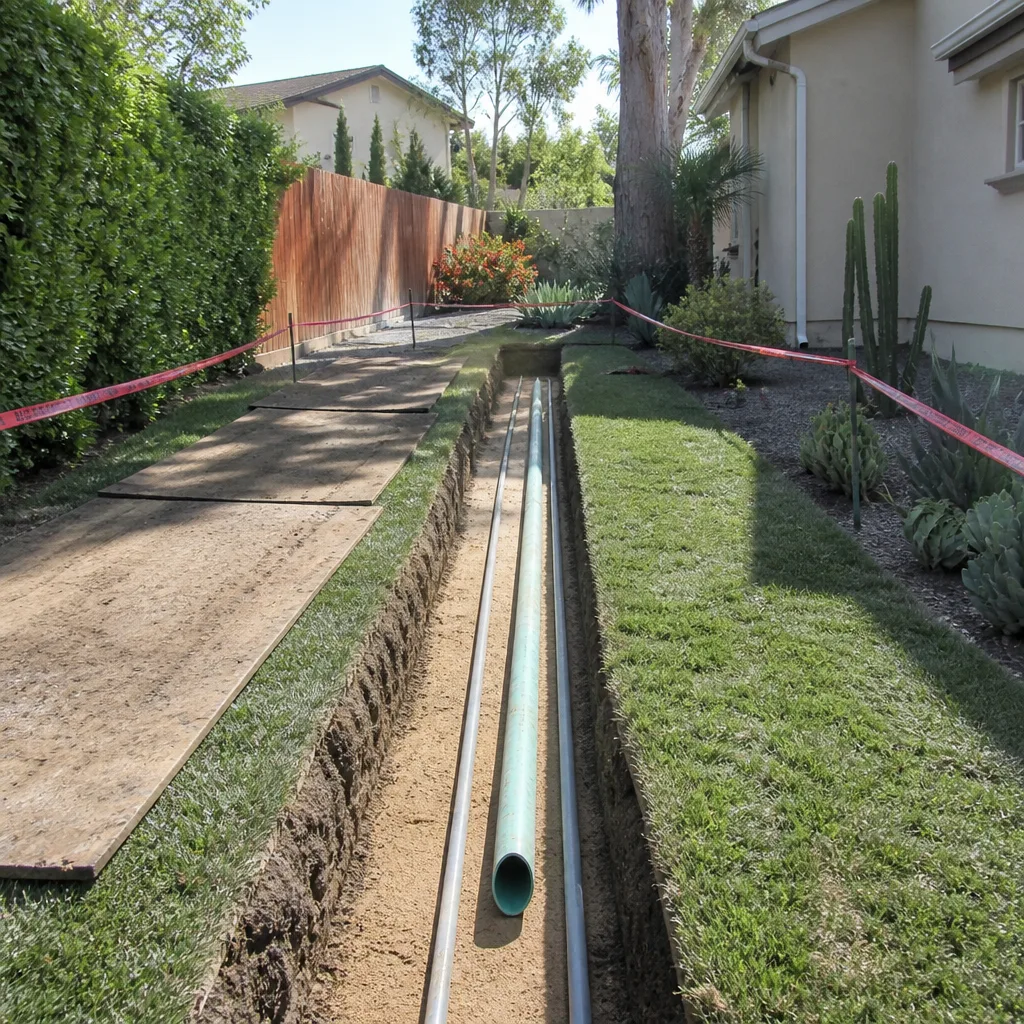
Utility connections are the most underestimated part of a Roseville ADU project because they run through three separate agencies: Roseville Electric for power, PCWA for water, and the City wastewater division for sewer. Each has its own application, fee, and inspection, and none of them coordinate with each other or with your building permit. The water meter’s 8 to 12 week lead time is the one item with a hard external clock, so file it during design development, before the building permit goes in. Decide the meter setup early, price the sewer capacity charge against your actual fixture layout, and design solar and the ADU electrical plan as one package. Do those things and the utilities stop being a back-end surprise. For a single-source partner who handles design, permits, and construction together, start with ADU Builder Roseville.
Call (279) 201-6719 to schedule your free estimate. We answer 24/7. Fast dispatch from 7am to 7pm, Sunday through Friday. Our technicians have up to 12 years of experience, and we build every ADU type, so the right fit drives the decision.
Written by the team at ADU Builder Roseville.