Last updated November 25, 2026
Prefab or Site-Built ADU in Roseville: How to Choose
The most common prefab ADU regret in Roseville isn’t the product. It’s discovering, after the deposit is down, that the crane needed to lift the modules can’t clear the power lines running along the side yard. That single detail can stall a project that looked perfect in a showroom photo. Prefab units are excellent buildings. They’re just not magic, and they can’t change the shape of your lot. This guide walks through the site conditions that decide which path is actually viable on a Roseville property, how the city treats manufactured ADU permits compared with site-built ones, what timeline comparisons really look like right now, and where each option wins on cost and flexibility.
Quick Answer
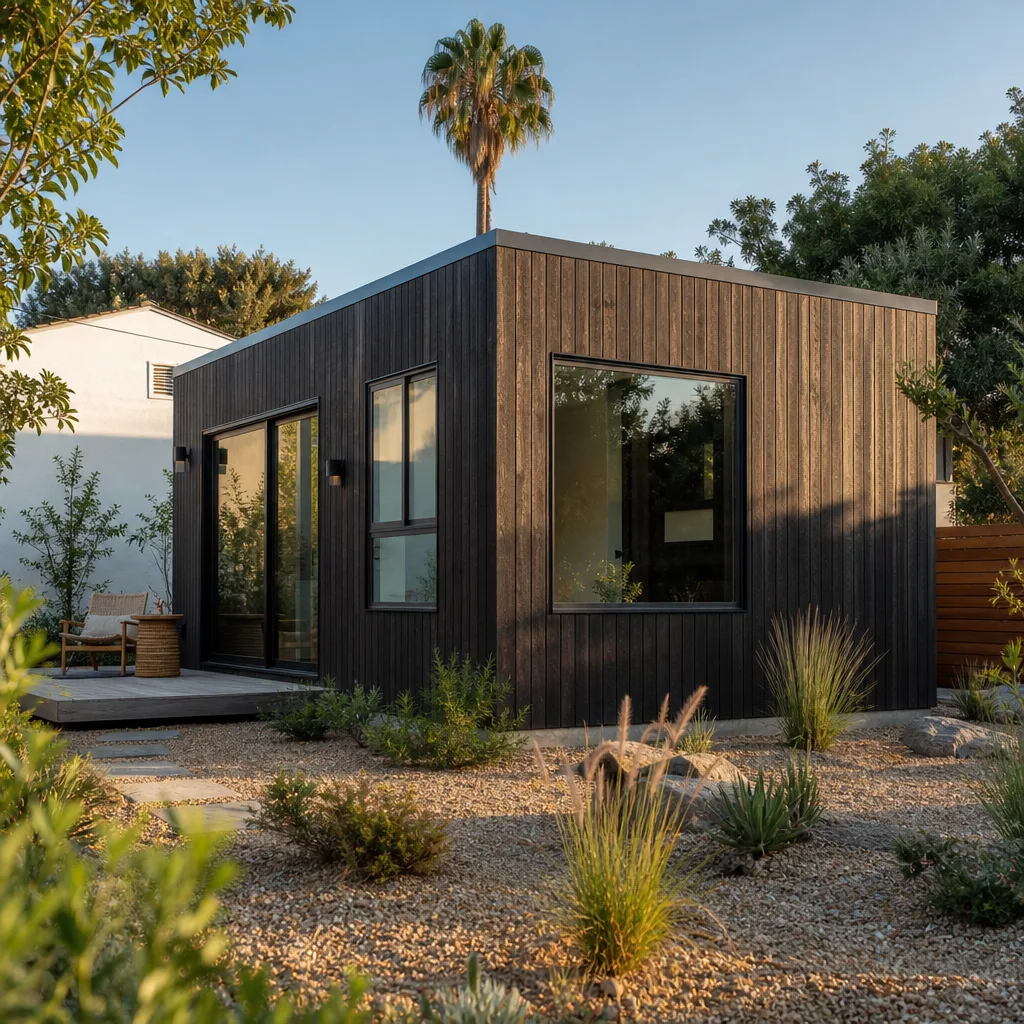
On many Roseville lots, the prefab-versus-site-built decision is made by the site, not by preference. A prefab ADU works well when you have clear module access, overhead clearance for a crane or lift, a straightforward foundation, and utilities that can be routed without major digging. When access is tight, the lot slopes oddly, or utility stubs are buried in awkward spots, site-built usually wins because the construction happens in place. The right call comes from evaluating both paths against your actual lot before you commit to a floor plan.
Table of Contents
- The Five Site Conditions That Decide the Answer
- How Roseville Handles Prefab and Site-Built ADU Permits
- Which Is Actually Faster in the Current Market
- Prefab Brands Worth Considering for Roseville Conditions
- Total Cost of Ownership: Predictable Versus Flexible
- Which Roseville Lots Favor Each Path
- A Step-by-Step Way to Decide
The Five Site Conditions That Decide the Answer
Before you compare prices or browse floor plans, check these five things on your property. Each one can rule out prefab on its own, regardless of how much you like the unit. In our experience building ADUs around Roseville, these are the details that catch homeowners off guard.
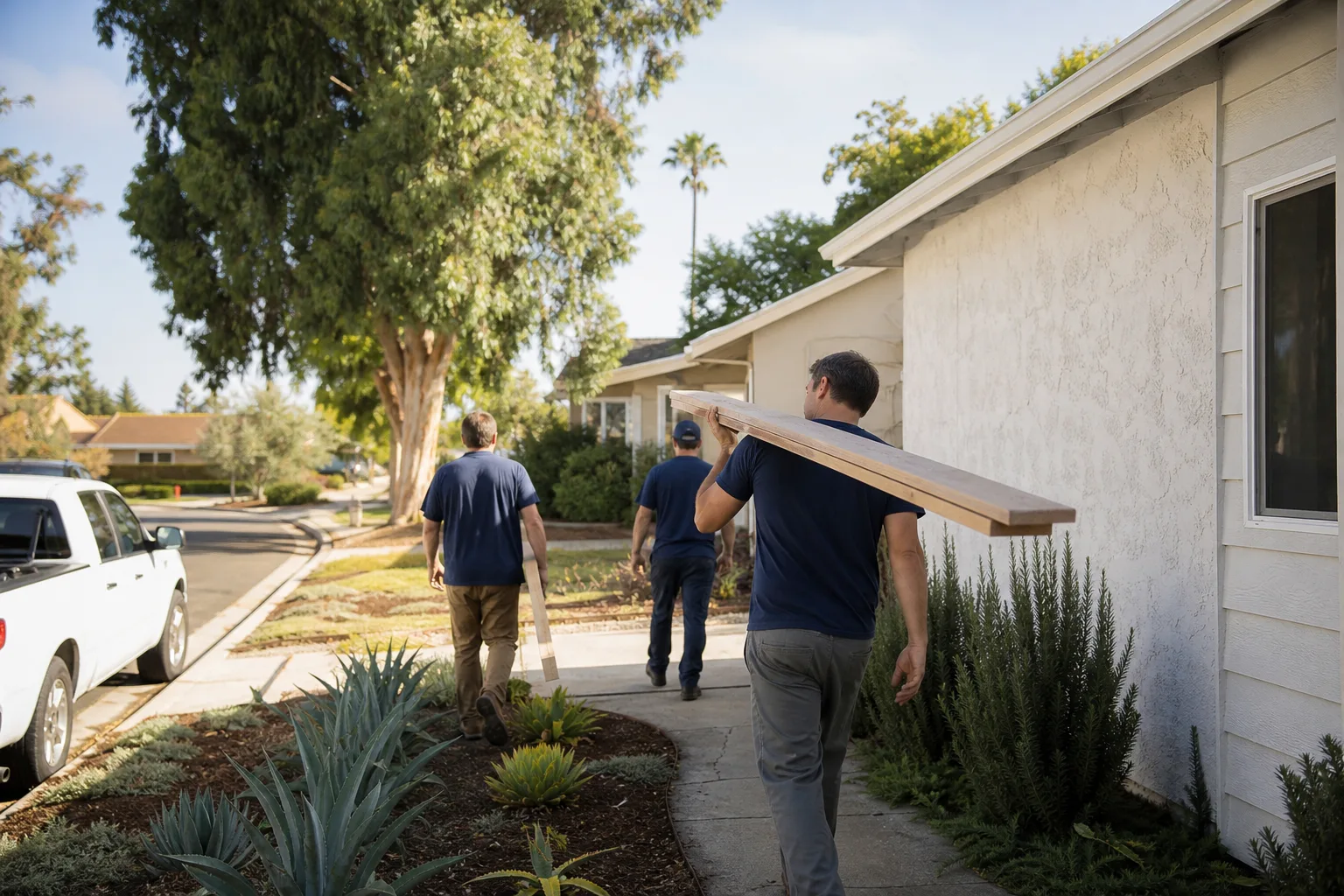
- Access width. Prefab modules arrive on a truck and get moved to the pad. The route from the street to the placement point needs enough width for the delivery equipment and the module itself, with margin. A narrow side yard with a fence, a mature tree, or a parked-car situation can shut this down.
- Overhead clearance. Power lines, tree canopies, and low service drops are the usual culprits. A crane has to lift a module over obstacles and set it down precisely. If the lift path is blocked, you’re looking at a different installation method or a different approach entirely.
- Foundation type. Prefab brands each have their own foundation requirements. Some want a slab, some work with a pier-and-beam system, and the design has to match your soil and grade. A lot with significant slope or drainage quirks may favor site-built, where the foundation gets tailored to the ground it sits on.
- Utility stub locations. Where water, sewer, and electrical actually connect matters. If the stubs sit on the far side of the lot from the ADU pad, trenching costs and complexity rise on either path, but prefab leaves less room to negotiate the routing.
- Soil bearing capacity. The ground has to hold the foundation and the structure above it. Soils vary across Roseville, and some lots need engineering attention before anyone pours concrete or sets piers. This is confirmed through a soils report and the city’s review, not guessed.
None of these are deal-breakers on their own. Together, they tell you whether prefab is realistic or whether site-built is the honest answer. If you’d like to understand the broader building process first, our ADU builder Roseville page covers the full scope from design through final inspection.
How Roseville Handles Prefab and Site-Built ADU Permits
Roseville’s Building Department reviews manufactured and modular ADU permits through a different pathway than site-built construction, and that difference often saves real time. Prefab brands that hold California state approval for their plan sets, typically through HCD certification, arrive with a plan set the city can review against a known baseline rather than starting from a blank sheet. That’s not a guarantee of a faster approval, but it does reduce the back-and-forth that eats weeks on custom drawings.
Site-built ADUs go through the full design and plan review cycle. An architect or designer prepares drawings specific to your lot, and the city reviews those drawings for code compliance, setbacks, height, and everything else that applies. That’s more work up front, but it means the design answer exactly to your property rather than fitting a factory footprint to it.
A few things worth knowing about how the two paths differ:
- Plan-set familiarity. Prefab brands that build in volume in California tend to have plan sets the city has seen before. Familiarity doesn’t equal automatic approval, but it reduces surprises.
- Site-specific drawing burden. Site-built projects carry the cost of lot-specific drawings, structural calculations, and engineering. Some of that is absorbed into the prefab product price instead.
- Inspection sequence. Both paths get inspected, but the sequence differs. Prefab units typically have factory inspections plus site inspections for foundation and utility connections. Site-built inspections run through the full construction sequence.
The rules themselves depend on your specific lot and the current version of the city’s ADU ordinance. Setbacks, height limits, and other requirements get confirmed with the city’s planning or building department before plans are final. We handle that confirmation as part of the project, and you can read more about that side of the work through our ADU builders page. Permits are part of our process, not your problem.
Which Is Actually Faster in the Current Market
Neither path is universally faster right now. The honest comparison depends on factory lead times for the prefab you want and the current availability of Placer County subcontractor crews for site-built work. Both have stretched and tightened over the past few years, and they don’t move in sync.
A realistic timeline comparison looks like this:
- Prefab, factory queue. Once you order, the unit enters a factory production schedule. That lead time is predictable in the sense that it’s set by the factory, not by weather or crew availability, but it’s not short if the brand is busy.
- Prefab, site work in parallel. Foundation, utility trenching, and site prep happen while the unit is being built. This overlap is one of prefab’s real advantages. If site work and factory time run side by side, the total project can compress nicely.
- Site-built, design and permit phase. Drawings, engineering, and city review come first. This phase runs regardless of how fast construction goes afterward.
- Site-built, construction phase. Framing, mechanical, electrical, plumbing, and finishes happen in sequence, each dependent on the right trade being available. In a busy market, sequencing gaps add up.
In our experience, prefab tends to win on calendar time when the site is straightforward and the brand’s lead time is reasonable. Site-built tends to win when the site needs custom work anyway, because the extra site prep eats prefab’s schedule advantage. The real answer for your project gets set in the written estimate, which lays out the schedule for the path we recommend.
Prefab Brands Worth Considering for Roseville Conditions
Not every prefab brand that looks good online translates to a smooth Roseville project. The ones that work well here tend to share a few traits: California HCD certification, plan sets sized for typical suburban lots, and construction details suited to a hot, dry-summer climate. Roseville sits in a climate zone that emphasizes cooling performance, shade, and roof and wall assemblies that handle summer heat. A brand built around a different climate may need adjustments that undercut its price advantage.
Three brands we work with regularly and know well:
- Abodu. A California-focused brand with plan sets that tend to review cleanly in jurisdictions that have seen them before. Footprints lean toward what fits a typical suburban side or rear yard.
- Cover. Known for clean, design-forward units and a process that maps well onto standard lot configurations. A good fit when you want a finished look without a long design phase.
- Dvele. Built around high-performance construction, which suits the local climate well. The assembly quality is a fit for homeowners who care about long-term energy performance.
Brands that look sharp in photos but come with plan sets nobody local has reviewed, or construction methods that don’t match California requirements, tend to create permitting friction. That friction usually shows up mid-project, which is the worst time. We work with the three brands above in addition to fully custom site-built options, so the recommendation follows the lot rather than a single product line. If you’re considering a smaller unit, our junior ADU page covers the compact format and how it fits alongside these brands.
Total Cost of Ownership: Predictable Versus Flexible
Prefab pricing is predictable. You know the unit cost, the foundation cost, and the site work cost before you commit, and those numbers don’t usually move much. Site-built pricing is more flexible, in both directions. It can come in lower on simple lots and higher on complex ones, because the design responds to the site rather than the other way around.
Where each path tends to win on total cost of ownership:
- Prefab wins on predictability. The factory price is the factory price. Site work is the main variable, and it’s scoped up front.
- Prefab wins on schedule-driven cost. When a project runs long, carrying costs run long with it. Prefab’s tighter calendar can reduce that exposure.
- Site-built wins on custom lots. When the lot has slope, an awkward shape, or utility routing that needs creative solutions, site-built lets the design answer the ground rather than forcing the ground to answer the design.
- Site-built wins on phased budgets. Some homeowners want to build in stages or adjust finishes along the way. Site-built accommodates that more naturally.
Every price is an estimate until it’s written down. We give a written, line-item estimate for either path, with fixed pricing and no change orders, so the number you see is the number you plan around. The estimate sets the final price.
Which Roseville Lots Favor Each Path
Roseville has a wide range of lot types, and the shape of your property often points toward one path. Older neighborhoods with mature trees and narrower side yards tend to favor site-built, because the trees and the tight access work against a crane lift. Newer subdivisions with cleaner access and straight side yards tend to favor prefab, because the site work is simple and the factory unit slots in cleanly.
Lots with significant slope, or with utility stubs in unconventional locations, generally favor site-built. The design can route around the constraint instead of hitting a wall. Corner lots, oddly shaped parcels, and lots with easements running through the build area are the ones where prefab’s fixed footprint most often runs into trouble.
Garage conversions sit in a category of their own. They’re often the most cost-effective ADU path because the structure already exists, and the work focuses on insulation, utilities, and finishes rather than a new foundation. If your garage is underused and the lot doesn’t easily take a new structure, a garage conversion may beat both prefab and site-built on cost and speed. Prefab doesn’t apply to a garage conversion, so it’s a third option worth considering before you settle on either of the main two.
A Step-by-Step Way to Decide
Here’s the order we recommend working through, so you don’t fall in love with a floor plan before you know whether it can reach your yard. This sequence saves time and avoids deposits on units that can’t be placed.
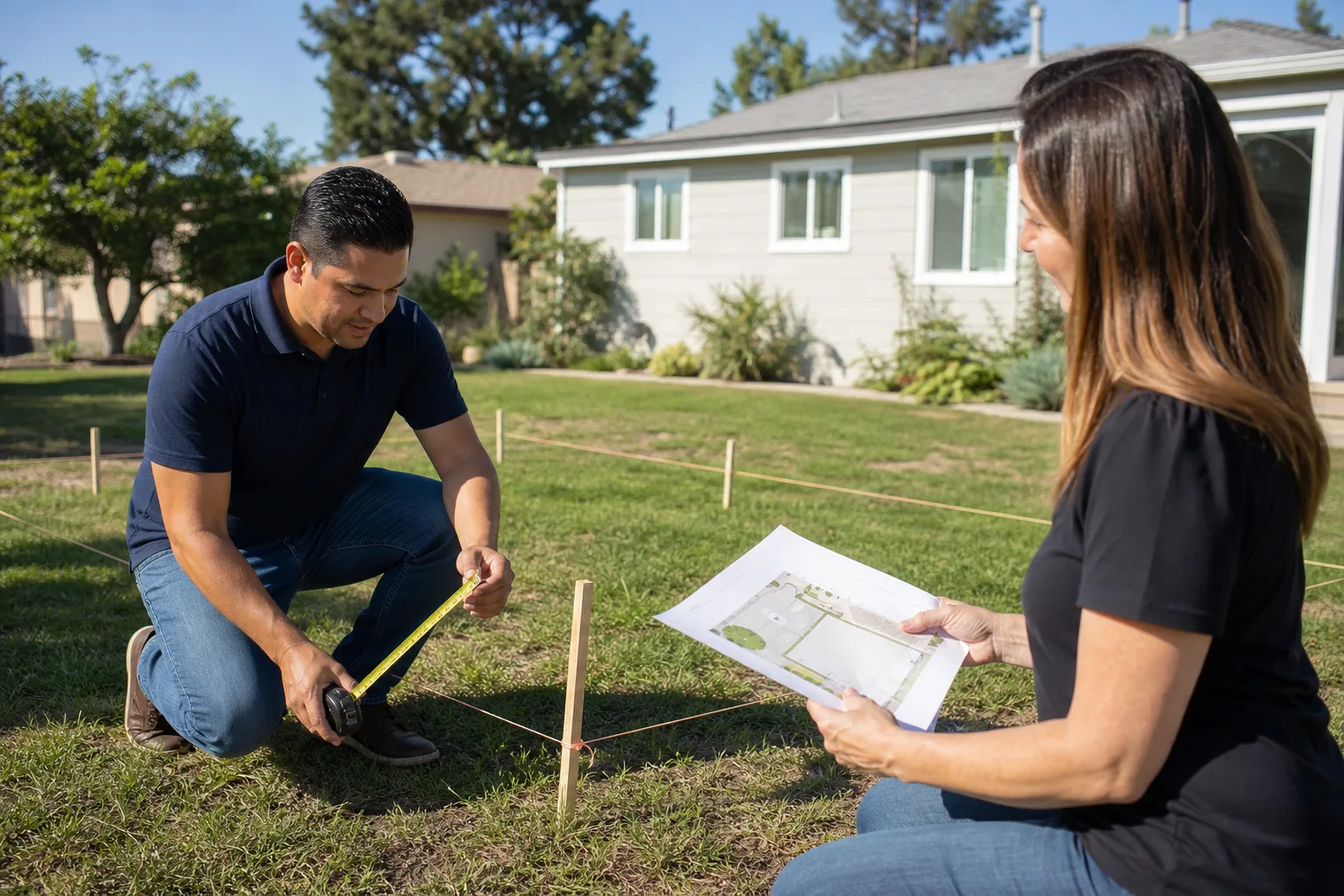
- Walk the lot with access in mind. Measure the narrowest point between the street and the proposed ADU location. Note fences, trees, and anything movable versus fixed. This tells you whether a delivery truck and lift can reach the pad.
- Look up. Note power lines, service drops, and tree canopies along the route. Overhead clearance is a common non-starter and it’s easy to check early.
- Identify utility stub locations. Locate water, sewer, and electrical connections. Distance and direction from the ADU pad determine trenching scope on either path.
- Get a soils read. Soils affect foundation design and cost. This gets confirmed through a report, not guessed from the surface.
- Confirm the rules for your lot. Setbacks, height, and other requirements get confirmed with the city’s planning or building department before plans are final. This is the step where projects get saved from expensive rework.
- Compare both paths on paper. With the site conditions known, the prefab and site-built options can be compared on real numbers rather than showroom photos.
- Get a written estimate. The estimate sets the final price and the schedule. Ask for line items so you can see what’s driving the number.
If you’d like help with any of these steps, call (279) 201-6719. We answer 24/7. Fast dispatch from 7am to 7pm, Sunday through Friday.
Common Mistakes to Avoid
- Ordering before checking access. The deposit goes down, then the crane can’t reach the pad, and the project stalls. Check access width and overhead clearance before you commit to any prefab unit.
- Assuming “prefab” means “no permit hassle.” Prefab still needs permits, and the review depends on the brand’s plan set and your lot. A brand with no local plan-set history can create the same review delays as a custom build.
- Comparing factory price to full site-built price. Prefab quotes sometimes exclude foundation, utility trenching, and site work. Compare apples to apples by asking for all-in numbers on both paths.
- Ignoring the climate zone when choosing a brand. A unit built for a mild coastal climate may underperform in Roseville’s hot summers. Check that the brand’s assemblies match local conditions.
- Falling for a floor plan that doesn’t fit the lot. A beautiful plan on a footprint that doesn’t clear setbacks on your parcel is a dead end. Confirm the footprint fits before you go further.
- Skipping the soils report. Foundation problems are expensive to fix after the fact and cheap to avoid up front. Get the soils read before anyone breaks ground.
- Coordinating three vendors yourself. When the designer, the permit expediter, and the builder are separate companies, the handoffs are where delays and cost creep live. Single-source delivery avoids that gap.
When to Call a Professional
Some decisions are best made with a specialist who evaluates lots every day. If your property has mature trees along the access route, overhead power lines near the proposed ADU location, a slope, or utility stubs in unusual spots, the prefab-versus-site-built answer gets complicated fast. The same is true when you’ve already picked a brand and want to know whether it can actually be placed on your lot, or when you’re comparing a garage conversion against a new detached unit and want honest numbers on both.
ADU Builder Roseville offers free estimates in Roseville, and we handle design, permits, and construction under one roof so you’re not stitching together vendors. Call (279) 201-6719 to schedule your free estimate. We answer 24/7. Fast dispatch from 7am to 7pm, Sunday through Friday.
Frequently Asked Questions
Prefab is often cheaper on straightforward lots, but not always. The factory price is predictable, and site work is the main variable. On lots with slope, tight access, or complex utility routing, site-built can come in lower because the design responds to the site instead of forcing a fixed footprint. The only way to know for your property is a written estimate on both paths. Call (279) 201-6719 for an exact quote, and estimates are free.
Five site conditions decide it: access width, overhead clearance, foundation type, utility stub locations, and soil bearing capacity. If all five check out, prefab is usually viable. If one or more creates a problem, site-built often becomes the better path. We evaluate all five on a site visit before recommending either option.
Yes, the review path differs. Prefab brands with California HCD-certified plan sets get reviewed against a known baseline, which often reduces back-and-forth. Site-built projects go through full plan review of lot-specific drawings. The specific requirements depend on your lot, and we confirm them with the city’s planning or building department before plans are final.
It depends on the brand’s factory lead time and Placer County subcontractor availability at the moment you build. Prefab can compress the total schedule when site work runs in parallel with factory production. Site-built wins on calendar time when the lot needs custom site work anyway, because that work eats prefab’s schedule advantage. The schedule for your project gets set in the written estimate.
Yes. We build fully custom site-built ADUs alongside the prefab options from Abodu, Cover, and Dvele. The right path follows the lot and the budget, not a single product line. We also build garage conversions and junior ADUs when those formats fit better. Call (279) 201-6719 to talk through which option suits your property, and estimates are free.
No. We give a written, line-item estimate with fixed pricing and no change orders, so the number in the estimate is the number you plan around. Site conditions that surface during the soils report or permit review are addressed before the estimate is finalized, not after. The written estimate sets the final price.
The Bottom Line
The prefab-versus-site-built decision in Roseville is about your lot first and your floor plan second. Check access width, overhead clearance, foundation needs, utility stubs, and soil bearing capacity before you commit to anything. Prefab wins on predictability and calendar time when the site is simple. Site-built wins on custom lots, awkward access, and flexibility. Garage conversions and junior ADUs are worth considering as third and fourth options before you settle on either main path. The right answer comes from evaluating the actual site, which is what a free estimate is for.
Call ADU Builder Roseville at (279) 201-6719 to schedule your free estimate. We answer 24/7. Fast dispatch from 7am to 7pm, Sunday through Friday. Permits are part of our process, not your problem, and every project gets a written, line-item estimate with fixed pricing before work begins. Our technicians have up to 12 years of experience, and ADUs are all we do.
Written by the team at ADU Builder Roseville.