Last updated November 25, 2026
Junior ADU or Full ADU: What Is the Difference?
Most homeowners start this conversation by asking about square footage. That’s the wrong first question. A Junior ADU and a full ADU are governed by different rules, and those rules decide who can live in the unit, how you meter utilities, and what happens when you try to sell or refinance. The cost difference gets the attention, but the legal difference is what actually shapes your next five years. A JADU can be recorded against your Roseville property title with an owner-occupancy requirement you cannot easily undo. That one detail has surprised plenty of homeowners midway through planning. This guide walks through the real fork in the road: space eligibility, occupancy covenants, utility laterals, and how lenders treat each unit type when you refinance.
Quick Answer
A Junior ADU is a small unit carved out of existing square footage in your home – typically a converted bedroom or attached space – and under state law it carries an owner-occupancy requirement recorded against the title, plus a cap on its size. A full ADU can be new construction, can stand detached, has no owner-occupancy covenant under state law, and can have its own utility laterals. In short: the JADU is faster and cheaper to permit but restricts how you use and rent the property. The full ADU costs more upfront but behaves like an independent unit.
Table of Contents
- The Legal Fork: Why the JADU Is Not a Smaller ADU
- Owner-Occupancy: What It Means When You Want to Move Out
- Space Eligibility: Existing Footprint vs. New Construction
- Utility Metering: The Separate Lateral Question
- When a Junior ADU Is the Smarter Choice
- Resale and Financing: How Lenders See Each Unit
- How This Plays Out on a Typical Roseville Lot
The Legal Fork: Why the JADU Is Not a Smaller ADU
It’s tempting to think of a Junior ADU as an ADU with fewer square feet. That framing leads homeowners into the wrong decision. The two unit types come from separate sections of state law, and those sections grant different rights.
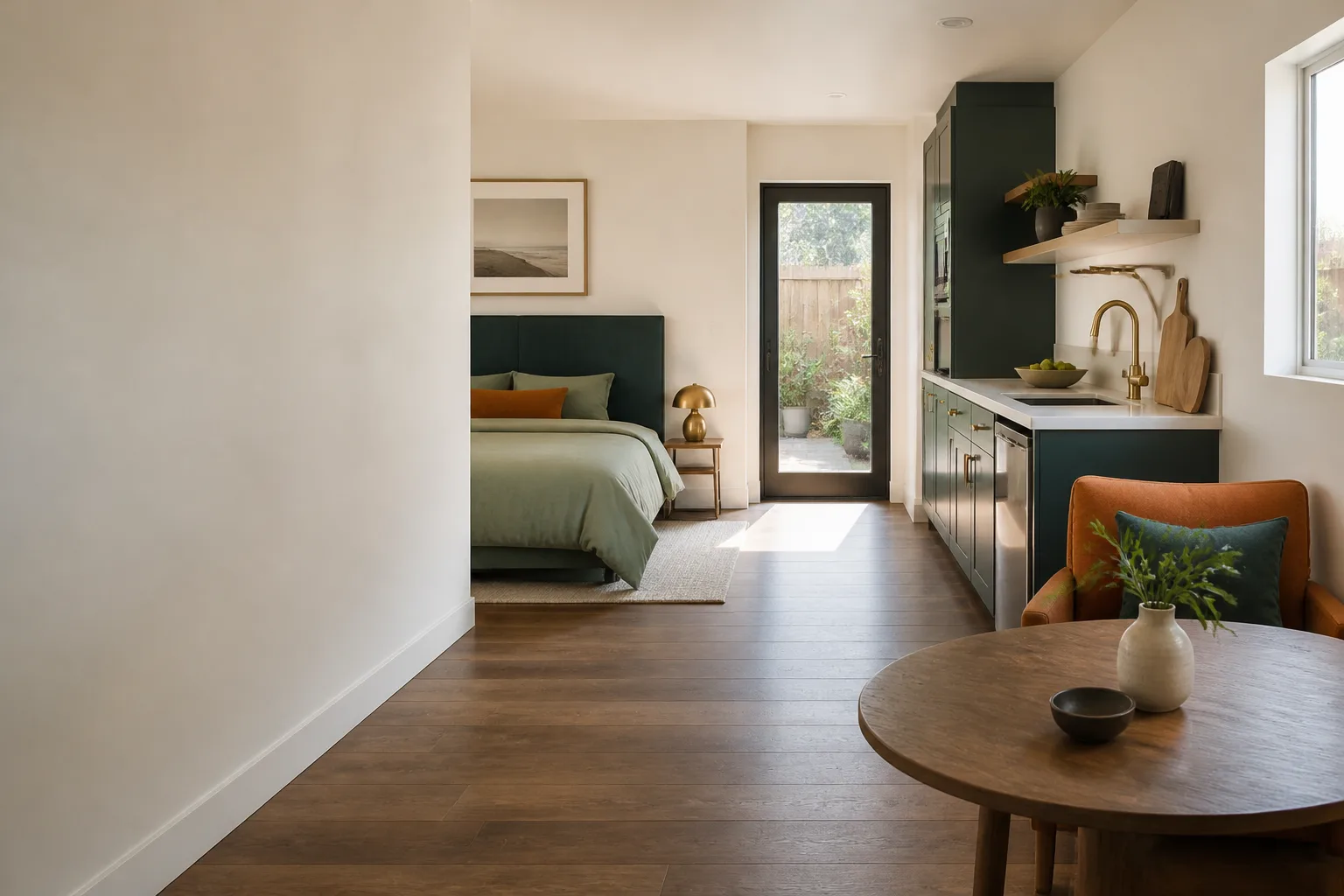
A Junior ADU must be created within the existing walls of a single-family home. It has a size cap under state law. It’s allowed to share bathroom facilities with the main house, and it’s allowed to share a kitchen under certain conditions. Those allowances are exactly why it’s cheaper to build. The trade-off is that a JADU is legally tied to the primary dwelling. It is not an independent residence in the way a full ADU is.
A full ADU can be detached, attached, or converted from a garage. It can be entirely new construction on open ground. It carries its own kitchen and bathroom as a matter of course. It is a separate dwelling unit in the eyes of the code, the lender, and the county assessor.
Here’s the practical way to hold the distinction in your head:
- Junior ADU: carved from existing space, size-capped, owner-occupancy required, may share kitchen or bath, no separate utility lateral.
- Full ADU: new or converted, no owner-occupancy requirement under state law, full independent kitchen and bath, separate utility lateral permitted.
- Garage conversion: a full ADU built inside your existing garage footprint – a middle path that keeps the detached feel without new foundation work.
The rules around how each type is counted, permitted, and recorded depend on the city and the specific lot, and they can shift. We confirm them with the city’s planning or building department before any plans are final, and we recommend you do the same, whether you work with us or not. From design to permit to move-in, that confirmation step is part of our process, not your problem.
Owner-Occupancy: What It Means When You Want to Move Out
This is the section most homeowners wish they’d read first. Under state law, a Junior ADU comes with an owner-occupancy requirement. One of the two units – the main house or the JADU – must be the owner’s principal residence. That requirement is recorded as a covenant against the property title.
What does that actually mean in practice?
- You can’t rent both units out. If you move out and lease the main house, the JADU can’t be separately rented under the covenant. The arrangement the JADU was designed for – you in the house, a tenant or family member in the JADU – is the arrangement the law expects.
- The covenant runs with the title, not with you. A buyer who purchases your Roseville property takes it subject to the same requirement unless the covenant is formally removed through the proper process. That’s not something a seller can simply ignore.
- It shows up in a title search. Buyers, lenders, and title companies see it. Some buyers will walk away when they realize they can’t rent both halves of the property.
- There are narrow paths for removal. State law has provided limited avenues for lifting the covenant in specific circumstances, but they depend on the details and they are not automatic. We always confirm the current rule with the city before relying on any of it.
A full ADU does not carry that same statewide owner-occupancy requirement. That’s the single biggest functional difference between the two unit types, and it’s why a homeowner whose five-year plan includes moving out and keeping both units rented should think carefully before choosing a JADU. The lower build cost only pays off if the unit type matches how you intend to use the property.
Space Eligibility: Existing Footprint vs. New Construction
A Junior ADU has to come from square footage that already exists inside your home. You’re converting space, not adding it. That’s a hard line. If your single-family home has no spare interior space to carve out, a JADU isn’t available to you regardless of budget.
A full ADU doesn’t have that constraint. It can be new construction – a detached structure in the backyard, a conversion of an attached garage, or an addition to the existing house. That flexibility matters on a lot where the interior is fully used.
On a typical Roseville single-story ranch home, the practical picture usually looks like this:
- The interior is fully allocated. Three bedrooms, two baths, a kitchen, a living room. There’s often no room to carve a compliant JADU without giving up a bedroom the household still needs.
- The garage is the natural conversion candidate. A garage conversion lets you build a full ADU inside an existing footprint, which often sidesteps the foundation and setback complications of new detached construction.
- Detached construction depends on the lot. Setbacks, lot coverage, and where the utility connections can run all shape whether a detached ADU fits. Those rules depend on the city and the specific lot, and we confirm them with the planning department before plans are final.
- Covered patios and bonus rooms are worth an honest look. Sometimes what looks like “nowhere to put a JADU” turns out to have a viable conversion once the space is measured against what the code requires.
If you’re weighing a conversion against new construction, our guide to a garage conversion walks through the trade-offs on a Roseville lot. The right format should drive the decision, and we build every ADU type so the fit is what settles it, not the format we prefer.
Utility Metering: The Separate Lateral Question
This is where a lot of JADU owners get a surprise on their water bill. A Junior ADU cannot have a separate water or sewer lateral. It shares the main house’s connection. A full ADU can have its own lateral, which makes it a functionally independent unit.
Why does that matter? Three reasons.
Responsibility. With a JADU, there’s no clean way to split the water bill between the main house and the unit. Everyone is on the same meter. If the JADU is rented to a family member, that’s usually fine. If it’s rented to a stranger, you’ll need a conversation about how utilities get divided, and you’ll need to put it in the lease.
Future independence. A full ADU with its own lateral can be metered and billed separately. The unit can stand on its own from a utility standpoint. That’s a real advantage if you ever want to track the unit’s actual operating cost, or if your long-term plan includes selling the units as separate properties where the city allows it.
Maintenance. A shared lateral means shared plumbing risk. A problem in the unit’s line is a problem in the house’s line. Separate laterals keep the two systems independent.
Neither path is wrong. But the answer to “who pays the water bill?” gets simpler with a full ADU, and homeowners planning to rent to someone outside the family tend to feel the difference. If the unit is for an aging parent or an adult child, the shared meter is rarely a problem.
When a Junior ADU Is the Smarter Choice
A JADU is not a compromise. In the right scenario, it’s the better answer, and some homeowners who force a full ADU onto an unsuitable lot end up with a more expensive, harder-to-build project than they needed.
The JADU wins clearly when:
- The lot is small and tight on open space. If setbacks and lot coverage rule out detached construction, an interior conversion keeps the project inside the existing footprint.
- The budget is genuinely limited. A JADU avoids new foundation, new roof structure, and new exterior envelope work. That typically means a lower permit and construction cost than a full ADU, even though we set pricing per job by written estimate.
- The use is multigenerational. When a parent or adult child moves in, the shared kitchen and bath arrangements a JADU allows often match how families actually live. The owner-occupancy requirement is satisfied by the household being there anyway.
- The rental plan is low-commitment. If the unit is a guest suite or a place for a family member to land, and you don’t intend to rent both halves of the property, the JADU restriction doesn’t bite.
- Interior square footage is genuinely available. A spare bedroom, a finished bonus room, or an unused portion of the home can be converted without sacrificing the household’s functional layout.
If you can check two or three of these boxes, a junior ADU may well be the more sensible path. If none of them apply, and especially if you see yourself moving out and renting both units, a full ADU is usually the better long-term move. Prefab options from Abodu and Cover are worth exploring as a comparison, though their products are typically full ADUs rather than JADUs.
Resale and Financing: How Lenders See Each Unit
Lenders and appraisers treat a JADU and a full ADU differently, and that difference is significant at two moments: refinancing and selling.
On refinancing, an appraiser generally values a full ADU as an income-producing dwelling unit, because it functions independently and can be rented separately. A JADU is often treated more conservatively. The appraiser can’t count it as a fully independent unit if the covenant on the title restricts how the property can be used. That can show up as a smaller bump in appraised value than the homeowner expected.
On selling, the same issues follow the property. Buyers will ask whether the unit can be rented. With a JADU, the honest answer depends on who lives in the main house, and the covenant on the title will come up during their due diligence. Some buyers see a JADU as a bonus; others see it as a limitation. Your pool of qualified buyers may be narrower than with a full ADU.
Financing the construction phase follows similar lines. Lenders evaluate the project’s cost, the property’s post-build value, and the unit’s rental potential. A full ADU generally gives them more to work with. The exact loan products available depend on your lender and your situation; we can walk you through what we’ve seen other Roseville homeowners discuss, but the lending decision is always between you and your lender.
How This Plays Out on a Typical Roseville Lot
Roseville’s housing stock is largely single-story ranch homes on lots with usable backyards, which shapes which unit type fits. The mild winters here mean detached construction doesn’t carry the weather-related complications it might in harsher climates. Foundation and drainage work still has to be done properly, but the seasonal constraints are lighter than they are in colder parts of the country.
The practical questions to answer before you decide:
- Is there interior space to convert? If yes, a JADU is on the table. If no, the conversation moves to full ADUs.
- What’s your five-year plan? Living in the house the whole time? A JADU’s restrictions don’t bite. Planning to rent both units? A full ADU is the safer bet.
- How will utilities be handled? A separate lateral adds cost to a full ADU but buys you independent metering.
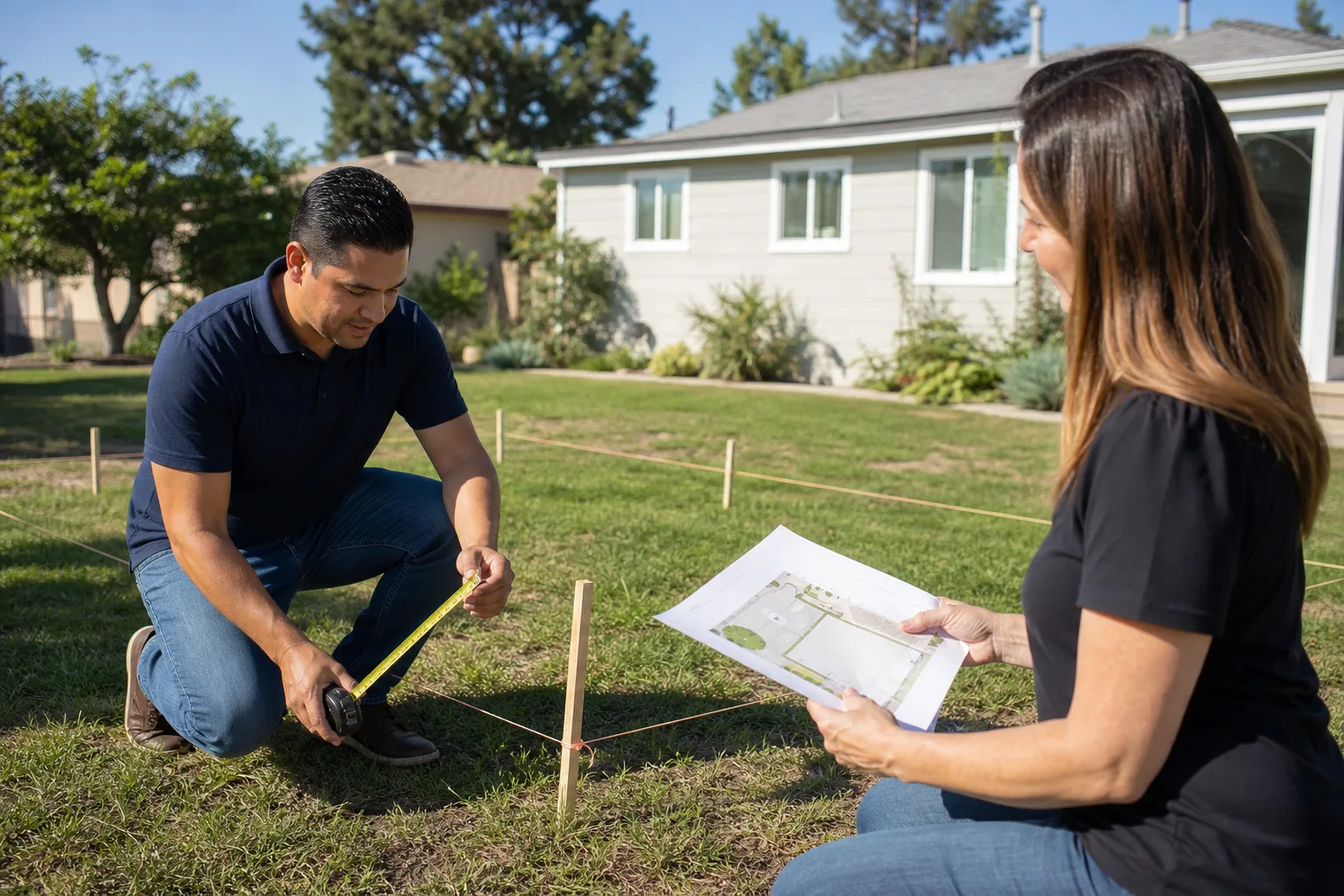
- What does the city require? Setbacks, lot coverage, permit requirements, and design standards vary by lot and by neighborhood. We confirm them with the city before plans are final.
- What’s the financing picture? Some lenders prefer full ADUs because they’re easier to value. Worth checking before you commit to a format.
We work with prefab brands including Dvele on the full-ADU side, and we build custom JADUs and full ADUs on site. The choice of format comes first; the choice of construction method follows. If you’re earlier in the process and want the full picture on how ADU projects come together in Roseville, our overview of ADU builders is a good starting point.
Common Mistakes to Avoid
- Treating the JADU’s lower cost as the whole story. A JADU is cheaper to permit and build, but if the owner-occupancy covenant conflicts with your plans, the savings don’t translate into value. Think about how you’ll use the property before you think about the price.
- Underestimating the title covenant. The owner-occupancy requirement on a JADU runs with the property, not with you. That affects what happens when you move out and when you sell.
- Assuming the JADU can be rented separately. In practice, if the primary residence isn’t where you live, the JADU can’t be leased independently under the covenant. Renting the unit alone is a much cleaner arrangement with a full ADU.
- Planning a separate water lateral for a JADU. A JADU cannot have a separate lateral, so any plan that assumes independent metering isn’t viable. A full ADU can.
- Ordering plans before checking the lot. Sketching an ADU before knowing what the city will approve on your specific Roseville lot wastes time and money. Confirm eligibility first.
- Ignoring the appraisal angle. If you’re relying on a refinance to fund part of the project, understand how lenders will value a JADU versus a full ADU. The difference can be meaningful.
- Piecing the project together with separate vendors. When the designer, the permit expediter, and the builder are three different companies, the gaps between them are where projects stall. Single-source responsibility keeps the work moving.
When to Call a Professional
If you’re early in the process and haven’t yet decided between a JADU and a full ADU, a conversation with an ADU specialist will save you weeks. The most common point of confusion is a homeowner who’s already picked a unit type before checking whether the lot supports it. A quick review of your property, your goals, and your budget clarifies which format fits before any designs are drawn. It’s equally worth a call if you’ve had plans drawn but haven’t yet confirmed what the city will approve, or if you’re weighing prefab against custom construction and don’t know which one wins for your situation. ADU Builder Roseville offers free estimates in Roseville. Call (279) 201-6719. We answer 24/7. Fast dispatch from 7am to 7pm, Sunday through Friday. Permits are part of our process, not your problem, and we handle design, permitting, and construction under one roof.
Frequently Asked Questions
No, not under the standard owner-occupancy requirement that applies to a Junior ADU under state law. One of the two units must be the owner’s principal residence, and that requirement is recorded against the property title. If you want the flexibility to rent both units, a full ADU is the format that gives you that option. Call (279) 201-6719 to talk through which format fits your plan – estimates are free.
Generally, yes. A Junior ADU is built inside existing square footage, so it typically avoids new foundation, roof structure, and exterior envelope work, which usually brings both permit and construction costs below a full ADU. The exact cost depends on your specific home and lot, and our written estimate sets the final price. Call (279) 201-6719 for a free estimate.
No, a Junior ADU cannot have a separate water or sewer lateral under state law; it shares the main house’s connection. A full ADU can have its own lateral, which allows independent metering. Whether a separate lateral is worth the added cost depends on how you plan to use the unit. Call (279) 201-6719 to discuss the options – estimates are free.
Lenders and appraisers generally treat a full ADU as an income-producing dwelling unit, because it functions independently and can be rented separately. A JADU is often valued more conservatively, since the owner-occupancy covenant restricts how the property can be used. The result is typically a smaller bump in appraised value for a JADU than for a full ADU. Speak with your lender for the specifics of your situation; if you’d like to review the project scope before that conversation, call us.
If your existing square footage leaves no room to carve out a compliant JADU, then a full ADU is the route – typically a detached build or a garage conversion. Roseville’s single-story ranch homes often fit the garage conversion path well, because it uses the existing footprint without new foundation work. Call (279) 201-6719 to schedule a free estimate and see what fits your lot.
Yes. We work with Abodu, Cover, and Dvele on full-ADU projects, alongside our own custom builds. Prefab units come with predictable factory timelines and design-forward finishes; custom builds give you more flexibility in floor plan and siting. Which one wins depends on your lot, budget, and timeline. Call (279) 201-6719 to compare the paths – estimates are free.
The Bottom Line
The JADU versus ADU decision is a legal and functional fork, not a size preference. A Junior ADU is cheaper and faster to permit because it’s built inside existing square footage, but it carries an owner-occupancy covenant that restricts how you can rent and sell the property. A full ADU costs more upfront but behaves like an independent unit: no covenant under state law, a separate water lateral, and cleaner treatment from lenders and appraisers. Match the unit type to your five-year plan before you match it to your budget. When they line up, the project runs smoothly. When they don’t, the savings from a JADU can be worth less than the flexibility you gave up. We handle design, permitting, and construction under one roof – so the choice is driven by what actually works for your lot and your life, not by vendor logistics.
Ready to talk through your options? Call ADU Builder Roseville at (279) 201-6719 for a free estimate. We answer 24/7. Fast dispatch from 7am to 7pm, Sunday through Friday. Prefab or custom, JADU or full ADU – the right fit drives the decision, and we build every ADU type. Start with a look at ADU Builder Roseville to see how we approach a project from first conversation to final inspection.
Written by the team at ADU Builder Roseville.