Last updated November 25, 2026
How to Hire an ADU Contractor in Roseville: A Step-by-Step Guide
A contractor with two hundred finished kitchen remodels and no permitted accessory dwelling unit to their name will usually cost you more time and money than a specialist with twenty ADUs. Here is the uncomfortable part: their bids often look nearly identical on paper. The difference hides in what the proposal does not say, in which license classification sits on the CSLB record, and in who owns the plan check corrections when the city sends comments back. This guide gives you a vetting framework built specifically for Roseville, so you can tell a true ADU specialist from a general contractor who has decided to try one.
Quick Answer
To hire an ADU contractor in Roseville, verify the contractor’s CSLB license classification covers the whole build, confirm they hold the design and permit work in-house rather than passing it to a separate architect, and require a written proposal with milestone-based payments tied to inspections. Ask five Roseville-specific permit questions before you sign anything, and walk away from any contract that leaves plan check revisions, utility coordination, or inspection scheduling on your shoulders.
Table of Contents
- Why an ADU Specialist Beats a General Contractor Who Does ADUs
- Five Questions That Reveal Real Roseville Permit Knowledge
- How to Read a Contractor’s CSLB License for an ADU Build
- Design-Build Specialist vs. GC With a Separate Architect
- What a Complete ADU Proposal Must Include
- Where Prefab Fits In: Abodu, Cover, and Dvele
- Red Flags in Roseville ADU Contracts
- The Vetting Process, Step by Step
Why an ADU Specialist Beats a General Contractor Who Does ADUs
An ADU is not a small house. It is a specific building type with its own code section in California, its own set of local overlays, and a permit path that runs through planning and building in a sequence a general remodeler rarely touches. A kitchen or bath remodel usually stays inside the building department. An ADU has to satisfy zoning, then design review, then plan check, then construction inspections, and a single missed item at any stage stalls the whole project before a shovel hits dirt.
That sequence is why specialization matters in a way it does not for other trades. Someone who builds kitchens every month is excellent at kitchens. The first ADU they attempt is a learning project, and you are the one absorbing the tuition.
What Actually Changes With a Specialist
- Permit fluency: They know which questions the city asks, in what order, and how to write plans that survive the first review pass.
- Change order discipline: ADU-specific scope decisions get made during design, not discovered mid-frame.
- Subcontractor sequencing: Utility trenching, foundation, and prefab delivery have to interlock precisely, and a crew that mostly does additions will sequence them the way an addition runs.
- Scope fit: They build detached ADUs, garage conversion projects, and junior ADU units, so the right format follows from your lot and your goals instead of whatever the contractor builds most.
None of this means a general contractor is dishonest. It means the fit matters, and the fit is testable. The rest of this guide is how you test it.
Five Questions That Reveal Real Roseville Permit Knowledge
Ask these five questions early, in the first conversation, and listen for whether the answer is specific to your lot or a recitation of generic California ADU rules. A specialist will answer with conditions (“depends on the setbacks, depends on what’s already on the lot, depends on the zoning district”). A generalist will answer with confident generalities. The conditional answer is the better sign.
1. “What is my parcel’s zoning, and how does it affect my ADU options?”
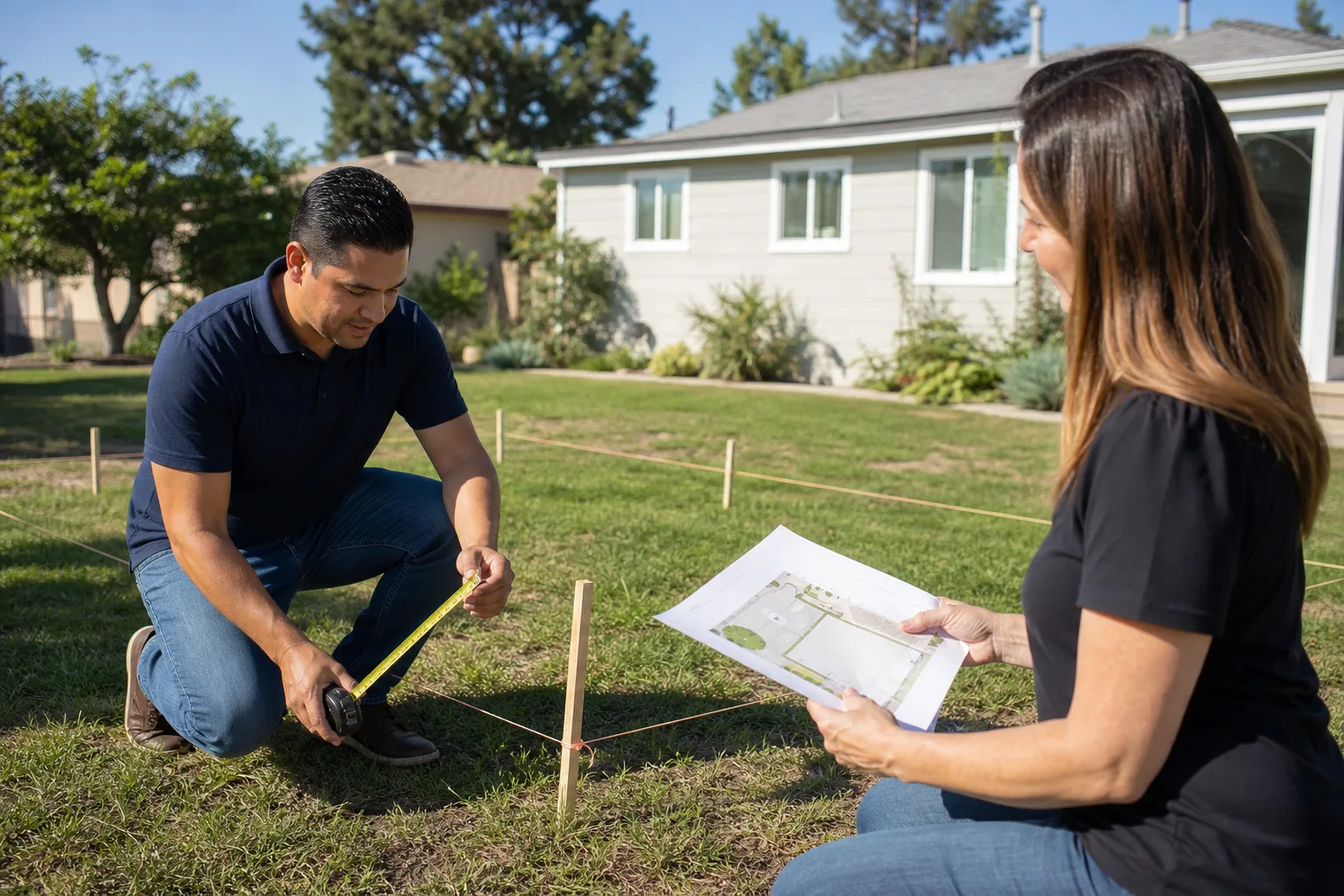
ADU allowances vary by zoning district, and what is permitted on your parcel depends on your lot size, existing structures, and the city’s current rules. A specialist knows to pull your parcel first and confirm with the city’s planning department before sketching anything.
2. “Which city department reviews my application first, and what are they going to ask?”
The answer should describe a sequence: planning review before building plan check, with items that can trigger return comments. If the contractor cannot describe that sequence for Roseville, they have not run one here.
3. “Who owns the plan check revisions if the city sends comments back?”
Correct answer: the contractor. If the contract says “included” but does not name revisions, that is not an answer.
4. “What utility coordination is on me versus on you?”
Water, sewer, and electrical connection decisions change your cost and timeline. A specialist has a standing process for utility coordination. A generalist will say “we’ll deal with it when we get there.”
5. “Have you built a unit in Roseville under the current ADU rules?”
You are not asking for a number. You are asking for a description of how the process actually ran, including where it slowed down. Someone who has never done it will describe the theory. Someone who has done it will describe the friction points.
If more than one of those answers is vague, cross them off your list. For a deeper walk through how the process runs from design to final inspection, our ADU builders page covers it in more detail. Call (279) 201-6719. We answer 24/7. Fast dispatch from 7am to 7pm, Sunday through Friday.
How to Read a Contractor’s CSLB License for an ADU Build
The Contractors State License Board record is public, and reading it properly is the single fastest way to filter a contractor. A full ADU build requires a license classification that covers the whole scope, and some contractors work around that with shortcuts that can leave you exposed.
What to Check on the License
- Classification: The license class must cover the work. A license that does not cover the structural work involved in an ADU is not the right license for an ADU.
- Status: Active, current, not suspended or expired.
- Business name and address: They should match the entity you are signing the contract with. If the license is held under a different name, ask why.
- Any disciplinary history: The record shows it, and it is public for a reason.
- Insurance: The local pro is licensed and insured as their state requires; confirm the certificate before work begins.
The Shortcut to Watch For
Some contractors hold a license that technically allows them to build, but not to design and engineer the whole unit, so they subcontract the design and permit work to a licensed architect or engineer. That subcontracting is legal. It becomes a problem when the contract does not name who owns the plan check revisions, because then corrections bounce between the architect and the builder while you hold the bill. Ask directly: “Who is the architect of record on this project, and who responds to correction comments?” A clear answer is a good sign. Silence is not.
Specialist ADU firms typically hold the design and permit work in-house, which reduces that coordination gap. That is the model we work under, and it is why we can tell you who owns each piece before a contract is signed.
Design-Build Specialist vs. GC With a Separate Architect
Both models can produce a good ADU. They fail differently, and which model fits you depends on how much of the coordination burden you want to carry.
The Design-Build Model
One entity runs design, permitting, and construction. When plan check sends comments back, that entity revises and resubmits. When the design creates a construction problem, the same entity resolves it. Accountability is single-source, and you have one party to call when something stalls.
The GC-With-Separate-Architect Model
You or your GC hires an architect, the architect produces plans, the GC bids the build. This can work well when you have a complex lot or a design you already love. The risk is the gap between the two: the architect’s plan is finished before the build is priced, and any conflict between the two becomes a negotiation you may have to referee.
How to Tell Which One You’re Getting
- Ask who prepares the site plan and who runs the permit application.
- Ask what happens, in writing, if plan check comments require a design change that changes construction cost.
- Ask whether the architect and the builder have worked together before, and how many times.
On our projects, we run design, permits, and construction as one process, which is the main reason plan check corrections do not sit in someone’s inbox waiting for a meeting. Permits are part of our process, not your problem.
What a Complete ADU Proposal Must Include
A good ADU proposal is more than a total dollar figure. It is a document that tells you exactly how the work will proceed, who is responsible for each phase, and how money changes hands in step with progress. If any of the five items below is missing, the bid is not complete.
1. Design Scope
What is designed, who draws it, what drawings are included, and how many design revisions are permitted before the plan changes cost money.
2. Permit Responsibility
Who files the application, who responds to plan check comments, who coordinates utility connection approvals, and who schedules final inspections. Written into the contract, not implied.
3. Utility Coordination
Water, sewer, gas, and electrical runs described specifically. Vague “allowances” for utilities are one of the top sources of cost overrun on ADU projects.
4. Construction Schedule With Milestones
A sequence of milestones labeled by finish point, not by date promises. Foundation, framing, rough-in inspection, finish, final inspection. The schedule is set in the written estimate, and the estimate should say so.
5. Payment Tied to Milestones
Payments should align with plan check approval, foundation completion, passed inspections, and final sign-off. Large upfront payments with nothing tied to progress are a red flag. A milestone schedule tied to inspections protects both sides.
For a look at how we lay out the full path, including how custom builds and prefab units are priced per job on a written estimate, see the ADU work we do as an ADU Builder Roseville specialist. Estimates are free.
Where Prefab Fits In: Abodu, Cover, and Dvele
Factory-built ADUs have changed the hiring conversation, and it is worth understanding what they solve and what they do not. A prefab ADU arrives as a nearly complete module that is set on your foundation and connected to utilities. The design work, factory construction, and site work are all distinct phases, and the site work is where most prefab projects either run smoothly or fall apart.
What Prefab Does Well
- Design is often already resolved, so fewer design-stage decisions land on you.
- Factory construction removes weather risk and site labor variability from the build itself.
- The floor plan catalogues are proven, which reduces the chance of a mid-project redesign.
Where Prefab Projects Stall
The site work is still your responsibility to get coordinated. Foundation, utility trenching, crane access, and the permit for the site improvements all run on a schedule that has to be ready before the unit ships. A prefab company that sells you a module is not automatically coordinating the site work. This is exactly where a specialist is worth the engagement, because the sequence is unforgiving.
We work with Abodu, Cover, and Dvele alongside custom builds. For lots that suit a factory module, prefab often wins on predictability. For lots with unusual geometry or a design you have already worked out, a custom build often wins. The right fit should drive the decision, not the contractor’s default product. If you want to compare the two paths side by side, our ADU builders page walks through both.
Red Flags in Roseville ADU Contracts
Most of the damage from a bad hires is done in the contract, before a single permit is filed. These are the specific contract problems we see homeowners come to us with after an earlier attempt stalled.
Vague Utility Allowances
A line item that says “utilities: TBD” or “utilities allowance” without a specific scope is a promise to fight later. Ask for a stated scope: what is trenched, what is connected, what is the contractor’s responsibility, and what triggers a change order.
No Plan Check Revision Responsibility
If the contract does not say who handles plan check comments and at what cost, assume you are paying for that round. City review almost always produces some comments on a first submittal. Corrections should be a named responsibility, not a surprise line item.
Inspection Scheduling Left to the Homeowner
The contractor schedules the inspections for work the contractor performs. If you are the one calling the city to schedule rough-in and final inspections, something is wrong with the arrangement.
One Large Upfront Payment
Payment should follow completed and inspected work. A contract that wants a large deposit before design work is even opened is a contract that has removed your leverage.
Design Named but Not Included
“Design included” and “design available” are not the same. The proposal should state what drawings are produced and by whom.
The Vetting Process, Step by Step
Run this sequence in order. Each step filters a set of contractors so you put your energy into fewer candidates.
- Screen on license and specialization. Confirm the CSLB classification covers an ADU build and confirm the firm’s focus is ADUs.
- Ask the five Roseville permit questions. You are looking for conditional, specific answers, not confident generalities.
- Ask who owns design and plan check revisions. Confirm whether the model is design-build or a GC working with a separate architect.
- Request a written proposal. Check it against the five-item completeness test above.
- Ask how payment is tied to milestones and inspections. If the answer only describes a percentage breakdown by month, ask again.
- Confirm who is the point of contact after the contract is signed. If that person changes, know who the replacement is.
- Get the estimate in writing before any deposit changes hands. Estimates are free, and the written estimate sets the final price.
Do this once and you will know more about your ADU project than most homeowners learn in a year of reading. Our garage conversion page shows how the process runs when the unit goes into existing structure, which is a different permit path in several respects.
Common Mistakes to Avoid
- Comparing bids on total price alone. Two bids for the same total can cover very different scopes. Undefined utilities and unowned plan check revisions are the two line items that make a low bid expensive. Break the proposals down line by line before you compare totals.
- Hiring a general contractor because they’ve done “an ADU before.” One project is a data point, not a specialty. Ask how many units they have carried through plan check and final inspection, and ask what slowed down on the most complicated one.
- Letting the design finish before the build is priced. In a design-then-bid sequence, the build price can come back far from the design’s intent. Design-build or a fully coordinated design and build proposal avoids that gap.
- Signing a contract that doesn’t name plan check revisions. City review almost always produces comments. If the contract doesn’t say who revises and resubmits, that cost lands on you.
- Assuming prefab removes the site work. A factory module still needs foundation, utility trenching, and a permit for the site improvements. The prefab vendor may not coordinate those.
- Paying a large deposit before design work opens. Payment should follow completed work and passed milestones. A large upfront deposit gives up your ability to correct course.
When to Call a Professional
Bring a professional in at the very start if your parcel’s zoning is unclear, if you are considering a garage conversion or a JADU and want to know which format the lot actually supports, or if you want a prefab path that requires coordinating site work with the module delivery. You also want a professional early if your goal is a unit that will be permitted and inspected, since retrofitting compliance onto a finished unit costs far more than building it right the first time. Our technicians have up to 12 years of experience, and the local pro we connect you with is licensed and insured as their state requires.
ADU Builder Roseville offers free estimates in Roseville. Call (279) 201-6719. We answer 24/7. Fast dispatch from 7am to 7pm, Sunday through Friday.
Frequently Asked Questions
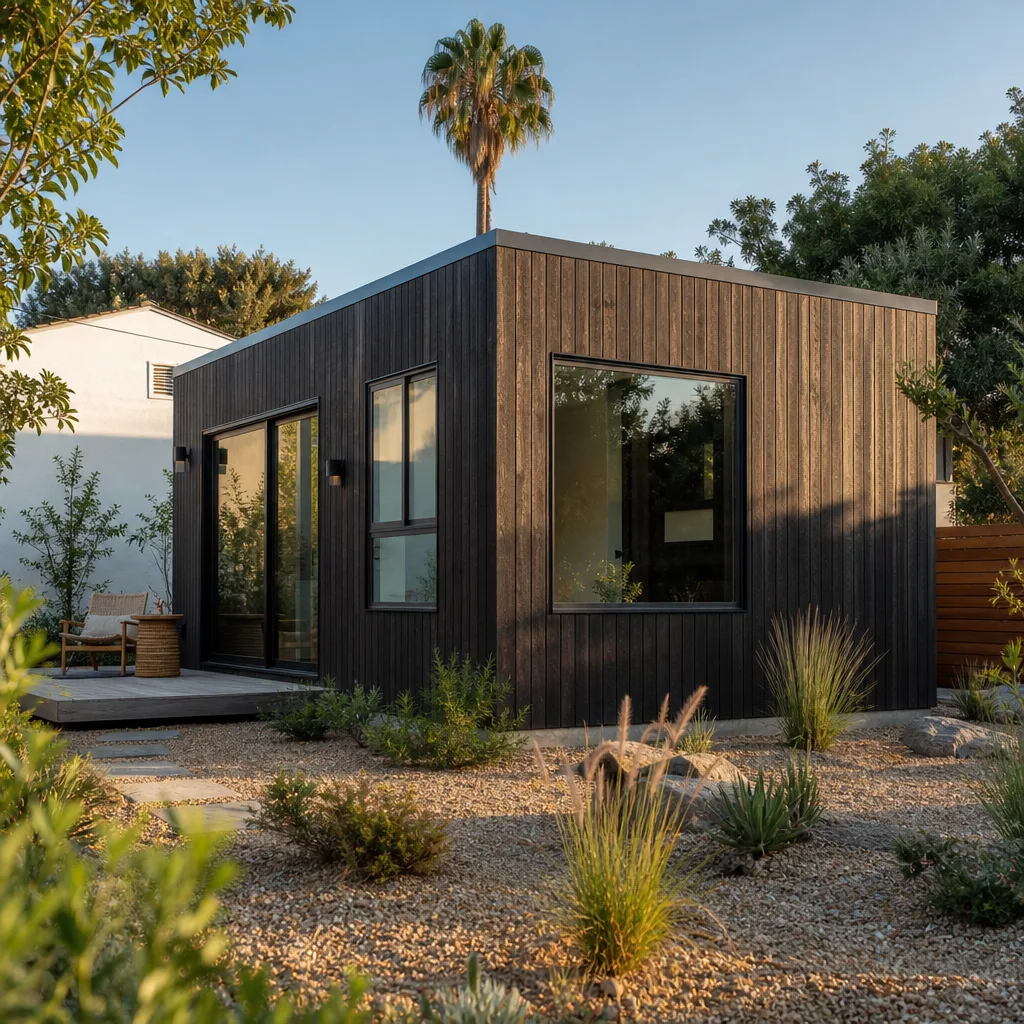
ADU pricing depends on the format (detached, junior, garage conversion, or addition), the design path, and site work, so the total is set per job on a written estimate after the scope is defined. Breaking the proposal into design, permit, site work, and construction lets you compare bids fairly. Call (279) 201-6719 for a free estimate in Roseville.
That depends on the unit and the scope, and the rule is set by the city and the state. What matters for hiring is that the contract names who is responsible for the design, who is the architect of record if one is required, and who responds to plan check corrections. Confirm those three in writing before the contract is signed.
The timeline is set by design decisions, plan review, site work, and construction, and the schedule is set in the written estimate for your specific project. The single biggest variable is design completeness before the first submittal; a complete plan set reduces the number of review rounds. Ask each contractor to describe their milestone sequence, not just a duration.
Prefab units are permitted the same way as built-on-site units, and the site work (foundation, utilities, crane access, site permits) has to be coordinated alongside the module. We work with Abodu, Cover, and Dvele, and also build custom, so the format should follow the lot. Call (279) 201-6719 to talk through which path fits your property.
A design-build specialist holds design, permitting, and construction inside one process, so plan check corrections and design conflicts have a single owner. A GC who partners with a separate architect can deliver a good build, but the contract has to name who owns the corrections and what happens if review comments change the build scope. Ask that question directly, and compare the written answers.
Look up the contractor on the CSLB website and confirm the license classification covers the full work, that the status is active, that the business name matches the contract, and that you have a current insurance certificate. Ask who holds the design and engineering responsibility. If the answer is not clear, keep looking.
The Bottom Line
Hiring an ADU contractor in Roseville comes down to one filter: does this firm own the whole process, in writing? A specialist holds design, permitting, and construction in one accountable process, answers your permit questions with conditions specific to your lot, puts plan check revisions and inspection scheduling in the contract, and ties payment to passed milestones. A general contractor who does ADUs occasionally may produce a good result, but you are carrying the coordination risk. Run the vetting steps, compare proposals line by line, and don’t sign until every responsibility is named. ADUs are all we do, and that focus shows in every project.
Call (279) 201-6719 for a free estimate. We answer 24/7. Fast dispatch from 7am to 7pm, Sunday through Friday.
Written by the team at ADU Builder Roseville.