Last updated November 25, 2026
The Complete Guide to ADUs in Roseville
Most homeowners who contact Roseville’s Planning Division for ADU guidance are quoting rules from Sacramento County, the wrong jurisdiction entirely. That single mix-up shapes the next several months of their project. Roseville runs its own planning department, its own permit counter, and its own interpretation of the state rules that govern accessory dwelling units. The state framework set by AB 68 and later legislation gives homeowners strong rights, but it leaves plenty of room for a city to be stricter in some places and defer entirely to Sacramento in others. This guide walks through where Roseville lands on each of those decisions, how the permit process actually flows, what triggers school district and utility fees, and how to pick the ADU type that fits a Roseville lot. Reading it before you spend a dollar on plans saves the most expensive kind of rework: the kind that happens after you’ve already paid for drawings.
Quick Answer
An ADU in Roseville is a secondary dwelling unit built on the same lot as an existing single-family home, and Roseville allows detached ADUs, attached ADUs, garage conversions, and Junior ADUs, each with its own permit path and fee profile. The city enforces some local development standards that are stricter than the statewide minimums and defers to state law on others, so where your lot falls matters more than the general California guidance you’ll find online. The fastest, cheapest route to a complete answer is to confirm your lot’s zoning, setbacks, and utility connections with Roseville’s planning department before design starts, which is part of every project we take on.
Table of Contents
- Why Roseville Is Not Sacramento County
- Setbacks and Lot Coverage: Where Roseville Is Stricter
- How Roseville’s Permit Process Works
- School District and Utility Fees That Surprise Homeowners
- Which ADU Type Fits Your Lot
- Prefab Versus Custom in Roseville
- Common Mistakes to Avoid
- Frequently Asked Questions
Why Roseville Is Not Sacramento County
Roseville is a Placer County city with its own planning division, its own building department, and its own interpretation of state ADU law. That matters because a large share of the ADU articles, checklists, and YouTube explainers circulating online are written for Sacramento County or for unincorporated areas. The rules, fee schedules, and review habits differ. When a homeowner walks into Roseville’s permit counter carrying Sacramento County guidance, they usually end up being corrected on the spot and losing time.
The state framework gives Roseville a floor, not a ceiling. AB 68 and follow-on legislation guarantee that most single-family lots can host some form of ADU, cap what cities can charge in certain impact fees, limit how far cities can push review timelines, and set minimum standards for things like parking and owner-occupancy. A city can be more generous than the state but only more restrictive where the law explicitly allows it. Roseville, like most cities, has used that room to add local standards around design review, fire access, and utility connections.
Here’s the practical version for a Roseville homeowner:
- The state framework protects your right to build an ADU on most single-family lots.
- Roseville sets the specific standards for your lot: zoning, setbacks, height, lot coverage, and utility requirements.
- Placer County and Sacramento County rules apply to parcels in those jurisdictions, not to parcels inside Roseville city limits.
- If your parcel sits near the city boundary, verify which jurisdiction it’s in before you assume anything.
We see this confusion constantly. A homeowner reads an article about a Sacramento County ADU, drafts a plan around it, then finds out during the permit intake that the setbacks and the water connection process in Roseville work differently. Confirming jurisdiction is the cheapest step in the entire project and the one most often skipped. If you’d rather skip the guesswork, our ADU builder Roseville team starts every project by confirming exactly which rules apply to your address.
Setbacks and Lot Coverage: Where Roseville Is Stricter
State law set a ceiling on how restrictive cities can be about setbacks for ADUs, but that ceiling applies to specific unit types and specific locations on the lot. Roseville enforces standards that are stricter than the statewide floor in some situations and defers to state minimums in others. The result is that two neighboring lots on the same street can have different answers depending on the existing house’s placement, the lot’s depth, and whether the ADU is detached, attached, or carved from the garage.
The general picture:
- Rear setbacks for detached ADUs are governed by a state minimum that cities can’t exceed for qualifying units, but the qualifying criteria are specific.
- Side setbacks, front setbacks, and separation between structures follow Roseville’s development standards, which are typically tighter than rear-yard rules.
- Lot coverage caps limit how much of the lot’s square footage can be covered by structures, including garages, sheds, and the new ADU together.
- Height limits have state-level protections for certain locations near transit and along major corridors, but Roseville interprets where those apply.
- Fire access, driveway width, and turning radius are reviewed on their own and can constrain placement even when setback math works.
Lot coverage is the sneaky one. A homeowner checks setback distances, gets excited, then discovers their existing detached garage, covered patio, and storage shed already crowd the coverage cap. The ADU has to fit within what’s left. We’ve built every ADU type, so the right fit drives the decision, and sometimes that means shifting from a detached unit to a garage conversion simply because the coverage math and the existing footprint point that direction.
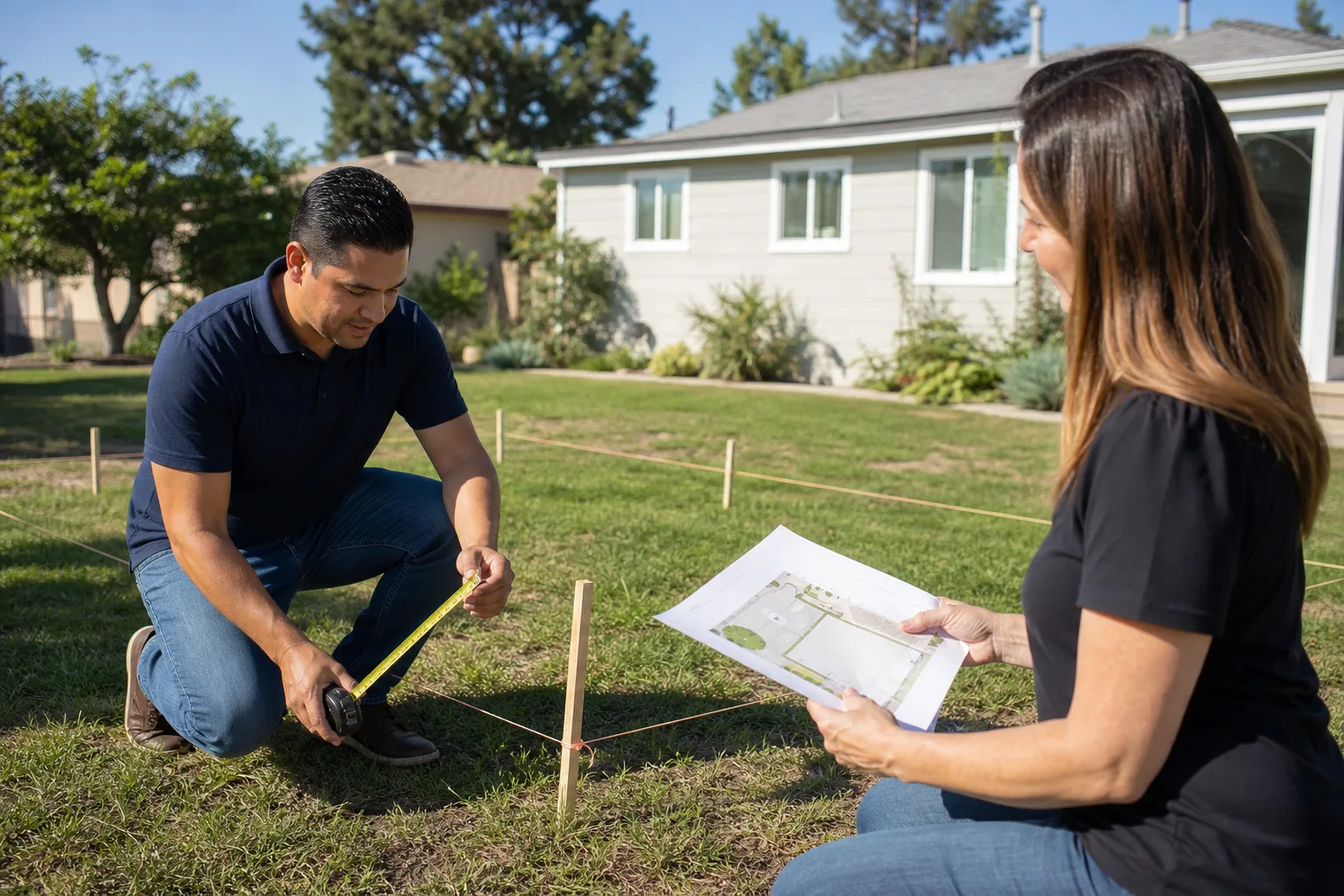
Owners often look at setbacks and lot coverage without a plan set in hand. In our experience, the review only becomes real when you draw the ADU on the actual lot survey. Roseville homeowners who measure first and design second avoid a lot of wasted drafting.
How Roseville’s Permit Process Works
Roseville review moves through different tracks depending on what you’re building. Some scopes clear through an express, over-the-counter style review. Others go through standard plan check, which is a longer queue and involves more departments reviewing the same drawings. The track your project lands on shapes the schedule, and it’s set by the scope, not by how the paperwork is submitted.
Here’s how the process generally unfolds for a Roseville homeowner:
- Pre-application review. Confirm zoning, setbacks, lot coverage, and utility availability for the specific parcel. Some of this can be answered over the counter, some requires a site plan.
- Design and drawing preparation. Architectural, structural, and energy drawings are prepared to Roseville’s submittal requirements. Drawings built for a different city’s checklist will return with corrections.
- Submittal and track assignment. The city assigns the project to an express or standard review track based on scope and location.
- Plan check comments and corrections. Nearly every project receives at least one round of comments. Responding quickly and specifically is where timelines are won or lost.
- Permit issuance. Once cleared, the permit issues and construction can begin.
- Inspections. Roseville inspects through a defined sequence from foundation to final. Each inspection has its own preconditions.
- Final inspection and closeout. The last inspection signatures close the project. Skip this step and the unit may not count for lender, appraisal, or resale purposes.
A critical point about track assignment and timelines: we never quote a Roseville permit timeline before we know the scope and the track. Cities vary in how quickly they review, and Roseville’s load shifts with how many applications are in the queue. Anyone who promises a specific number of weeks before seeing the drawings is guessing. The written estimate spells out the schedule we commit to.
Permits are part of our process, not your problem. That’s the reason we handle submittal, correction cycles, and inspections in-house rather than handing the homeowner off to a permit expediter. The ADU builders we work with on every Roseville project treat permit navigation as a core service rather than an afterthought.
School District and Utility Fees That Surprise Homeowners
ADU projects in Roseville can trigger school district impact fees and utility connection fees that homeowners rarely anticipate, and the amount depends on the unit type. Two different districts operate within Roseville’s boundaries: Roseville City School District and Western Placer Unified School District. Which one applies depends on the address. Fee schedules for both have been adjusted at the state level in recent years, and the exemption thresholds tied to unit size matter enormously.
The fee landscape, in general terms:
- School impact fees. The state sets a square-footage threshold below which ADUs are exempt from school fees. A unit that lands under that threshold is typically exempt; a unit above it is not. The state framework also limits how cities and districts can charge these fees on ADUs above the threshold compared to a primary dwelling.
- District variation. Roseville City and Western Placer have different fee schedules and different administrative processes. The address controls which one reviews your project.
- Water. PCWA supplies water in Roseville, and the connection process, meter requirements, and service fees are governed by PCWA rather than by the city. This differs from Sacramento, where water is typically handled through the City’s own utility.
- Sewer. The City of Roseville handles wastewater. Sewer connection fees and capacity charges depend on whether the ADU needs a new lateral, shares the existing one, or doesn’t require a new connection at all.
- Fire and other districts. Depending on location and scope, fire district review and impact fees may also apply.
Homeowners researching ADU costs often pull up Sacramento’s fee schedules and assume Roseville mirrors them. It doesn’t. PCWA’s water connection structure is distinct from Sacramento’s, and Roseville’s school district fees are administered by different districts than the ones a Sacramento homeowner would research. Getting this right before design begins can determine whether a JADU or a small detached ADU fits your budget better, since the fee profile of the two is not the same.
We confirm the applicable district and utility schedules for every Roseville address we work on, and the written estimate lists those costs as separate line items. The estimate is free. The fees are not, and pretending otherwise is the fastest way to blow a project budget.
Which ADU Type Fits Your Lot
Roseville allows four ADU types on most single-family lots, and the right one is determined by the lot, the existing house, and the budget, not by preference alone. Working through the four options in order of simplicity usually produces a clear answer within a few minutes.
Here’s a decision flow that matches how we approach a Roseville property:
- Do you have garage space you don’t fully use? If yes, a garage conversion is often the fastest path. It reuses the existing footprint, sidesteps new foundation work, and often reduces lot coverage pressure. The trade-off is that you lose parking, which matters on narrow lots or for households using the garage for storage.
- Can an existing bedroom and bathroom be converted into a self-contained unit with a small kitchenette? If yes, a junior ADU (JADU) is often the least expensive option. JADUs have their own rule set, including an owner-occupancy requirement, and they’re limited to a specific maximum square footage under state law. They don’t require a new structure, and they often clear permits faster than new construction.
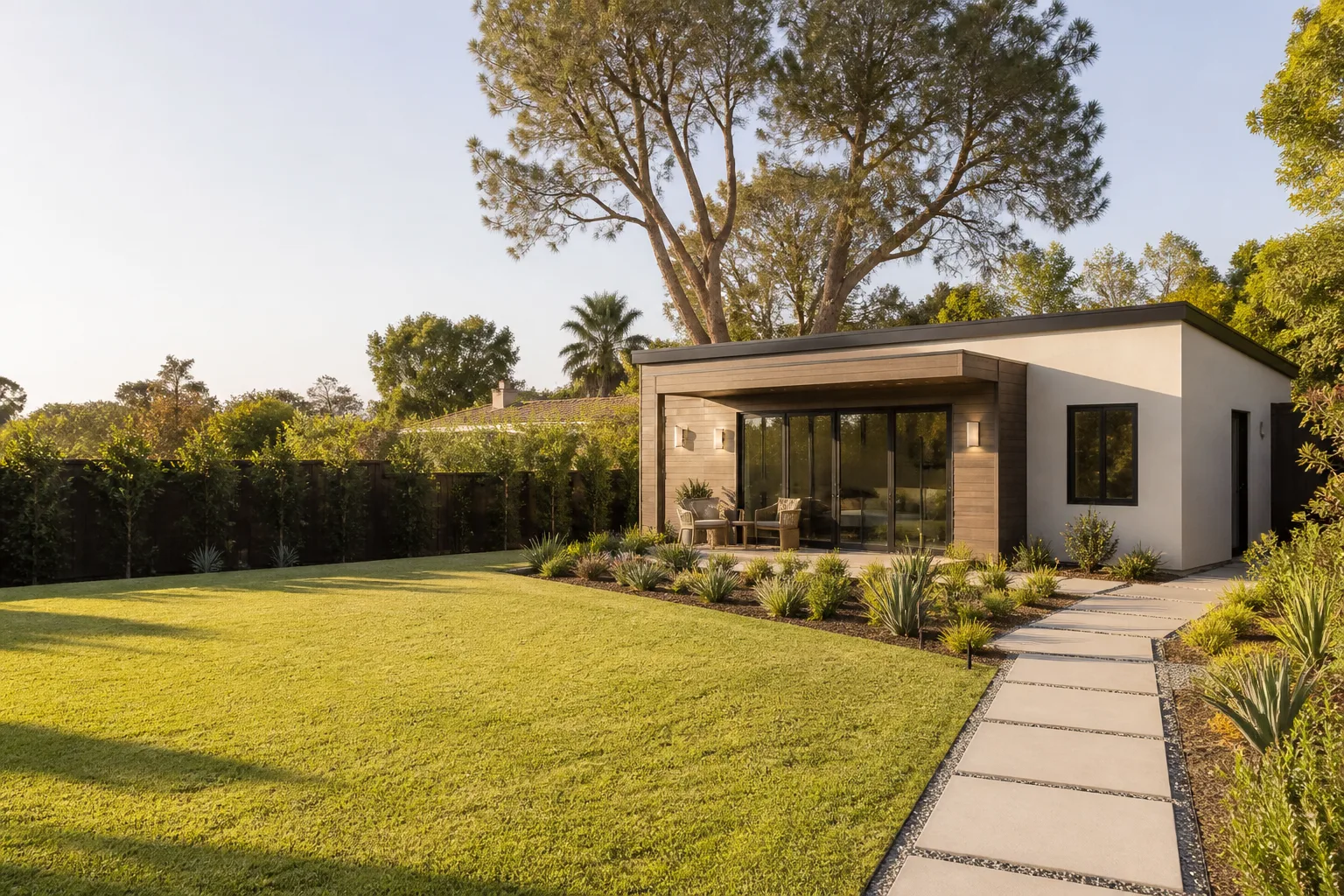
- Is there room for a separate structure after setbacks and lot coverage? If yes, a detached ADU is usually the strongest long-term investment. It maximizes privacy for family members, produces the best rental profile, and gives the most design freedom.
- No room for a detached unit, but room to expand existing square footage? If yes, an attached ADU (a home addition built to ADU standards) is often the answer. It’s typically the most complex of the four to permit because it changes both the existing structure and the ADU, but it’s a legitimate fit where the other options close off.
Roseville’s housing stock and lot sizes push homeowners in different directions depending on the neighborhood. In the older central neighborhoods, garages are often detached with alley access, which makes garage conversions and rear detached units especially clean. In the newer growth areas, lots tend to have more depth but tighter side setbacks, which often pushes the answer toward rear placement. The point isn’t to generalize about a neighborhood. It’s to confirm the specific lot.
We build every ADU type, so the right fit drives the decision. No one type is treated as the house specialty. When a homeowner’s first instinct is a detached ADU but the lot only works for a garage conversion, we say so.
Prefab Versus Custom in Roseville
Prefab ADUs have moved far beyond the shed-with-a-kitchen stereotype. Three companies in particular, Abodu, Cover, and Dvele, now produce design-forward, factory-built units that hold up to custom construction on finish quality while shortening the on-site construction phase. For Roseville homeowners who want predictable execution and a modern look, prefab is a legitimate path. For others, custom design around a specific lot and existing house is the right answer. Prefab or custom, we know both paths and when each one wins.
How the two compare in Roseville:
- Prefab. A unit is manufactured in a factory and installed on your Roseville lot. Site work, foundation, utility connections, and final inspection still happen locally. Predictability in the unit itself comes at the cost of some design flexibility on aspects like exterior finish and interior layout. Working with Abodu, Cover, or Dvele gives access to their catalogs directly.
- Custom. Designed around your Roseville lot and existing house, built on site. More flexibility on layout, materials, and roofline matching. Drawings and permits are project-specific, which means more design time and more likelihood of at least one round of plan check corrections, but the result fits the property rather than sitting on it.
The mistake we see most often is homeowners assuming prefab is automatically faster. It often is on the construction side, but the site work, foundation, utility connections, and permit review still run on Roseville’s clock. A prefab unit doesn’t shortcut permit review just because the walls arrive assembled. The best way to use prefab is to treat it as one option among four ADU types (detached, attached, garage conversion, JADU) and after that as a within-type choice between factory and site-built.
If you’re leaning toward prefab, the sequence we recommend is design review first, catalog selection second. Design review tells you what footprint your lot allows. Then you can look at Abodu, Cover, or Dvele catalogs and see what fits that footprint, instead of picking a unit and then discovering the lot won’t accommodate it.
Common Mistakes to Avoid
- Using Sacramento County guidance. Roseville is in Placer County with its own planning division and its own local standards. Every Sacramento-specific checklist needs to be replaced with Roseville-specific rules before it’s used.
- Skipping the lot survey. Setbacks and lot coverage can only be checked against an accurate survey. A homeowner who designs off an assessor’s parcel map without verifying improvements is often back at the drawing stage after the site visit.
- Ignoring lot coverage as a constraint. A garage, a covered patio, a shed, and an ADU together can crowd the coverage cap even when each one individually seems moderate. Do the math before design, not after.
- Assuming the wrong school district. Roseville City School District and Western Placer Unified have different fee schedules and processes. Fees and exemptions depend on which district your address falls under and where the ADU’s square footage lands relative to state thresholds.
- Treating PCWA like a city water department. PCWA supplies water in Roseville and its connection process is separate from the city’s. Homeowners comparing to Sacramento often plan for the wrong sequence of connection steps.
- Assuming prefab shortcuts permits. Prefab units arrive assembled, but the Roseville review process runs on the same clock. Prefab reduces construction time, not review time.
- Overlooking the final inspection. An ADU that’s built but never closed out at final inspection loses some of its value for lending, appraisal, and resale. The last inspection matters as much as the first.
When to Call a Professional
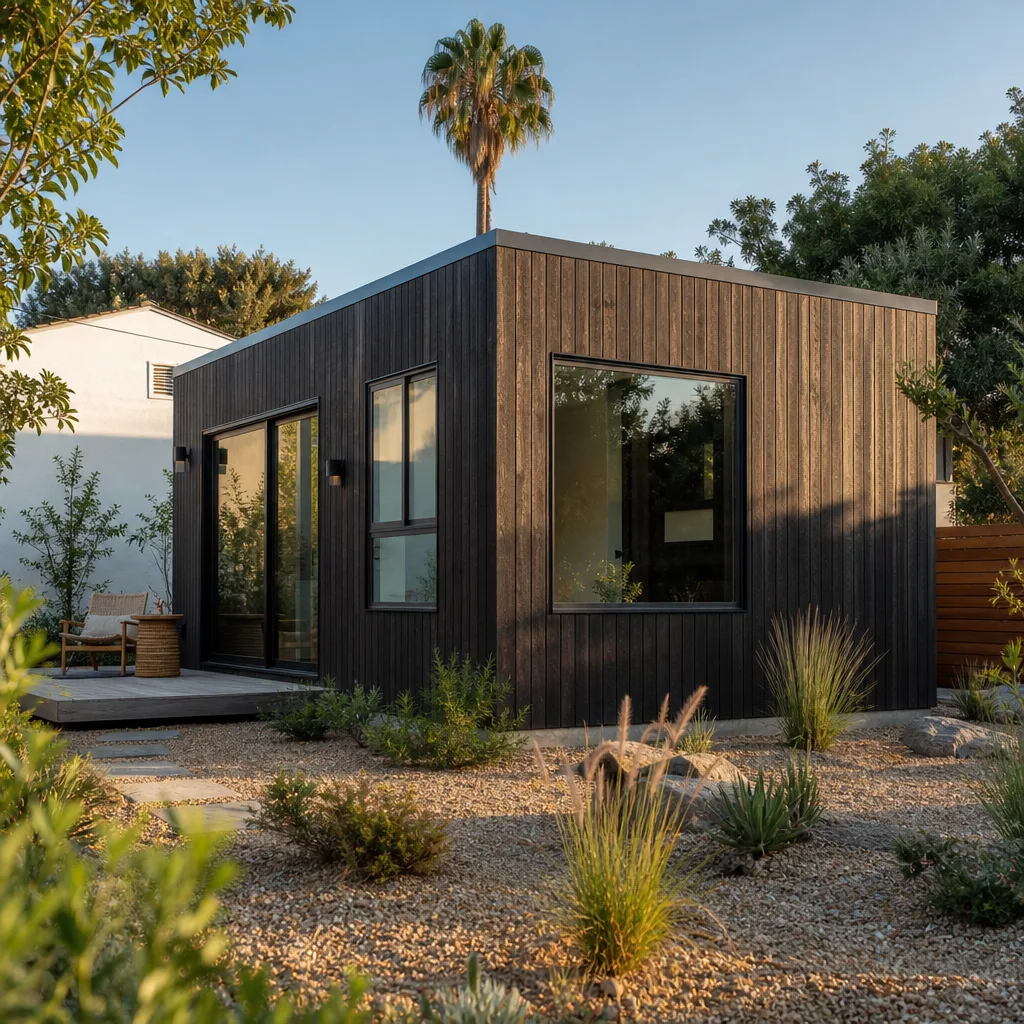
Call a professional ADU specialist when any of the following is true for your Roseville property: your lot’s zoning and setbacks aren’t clear to you; your existing house sits in a location that makes coverage math tricky; you’re torn between a garage conversion, a JADU, and a detached unit; or your first two plan check submissions have come back with corrections you’re not sure how to resolve. Each of these situations costs more to unwind than to prevent. ADU Builder Roseville offers free estimates in Roseville, and we confirm the applicable Roseville and Placer County rules for your address, sort out the school district and utility fee schedules, and produce a written line-item scope with the schedule we commit to. Call (279) 201-6719. We answer 24/7. Fast dispatch from 7am to 7pm, Sunday through Friday.
Frequently Asked Questions
Most single-family lots in Roseville can support at least one ADU under state law combined with the city’s local standards, but whether your specific lot qualifies depends on zoning, setbacks, lot coverage, and utility availability. State law protects the right to build on most single-family lots, but Roseville’s local standards still control the details. The safest step is to confirm your specific parcel with the city’s planning department before design starts. Call (279) 201-6719 for a free estimate and we’ll walk through your address with you.
Roseville ADUs can trigger school impact fees depending on the unit’s square footage and which district your address falls under. Roseville City School District and Western Placer Unified operate in different parts of the city, and their schedules differ. The state framework sets a square-footage threshold below which ADUs are exempt and caps fees on units above it. Whether your ADU falls above or below the threshold determines the fee. Call (279) 201-6719 for a free estimate, and we’ll confirm which district applies to your address and walk through the fee picture.
Water is supplied by PCWA in Roseville, not by a city water department, and the connection process, meter requirements, and service fees flow through PCWA. Sacramento water is typically handled by the city utility, so the two processes look different from start to finish. Sewer is handled by the City of Roseville, and whether you need a new sewer lateral, a shared connection, or no new connection at all depends on the ADU type and site. Call (279) 201-6719 for a free estimate, and we’ll map out the sequence for your address.
A junior ADU is typically the least expensive of the four ADU types because it reuses existing square footage within the home rather than adding a new structure. JADUs have their own rule set: they’re capped in size, they require owner-occupancy, and they need a small kitchenette and their own entrance. A detached ADU usually costs more to build but produces the best rental profile and gives the greatest design freedom. Call (279) 201-6719 for a free estimate and we’ll compare both for your lot.
Roseville ADU permit timelines depend on which track your project lands on and how quickly corrections are resolved. Express review handles simpler scopes; standard plan check applies to more complex projects. We never quote a Roseville permit timeline before we know the scope and track, because review load shifts and any number quoted in advance is a guess. The written estimate spells out the schedule we commit to. Call (279) 201-6719, and we’ll walk through your project scope and what to expect.
Prefab makes sense in Roseville when you want design-forward finishes and predictable construction with less on-site time. Working with brands like Abodu, Cover, and Dvele gives access to factory-built units, and site work, foundation, utility connections, and final inspection still happen locally. Prefab reduces construction time, not Roseville permit review time. A good approach is to confirm what your lot allows first and then look at catalogs. Call (279) 201-6719 for a free estimate, and we’ll help you evaluate both paths against your Roseville address.
The Bottom Line
Roseville ADU projects go smoother when the jurisdiction is sorted first. The city runs its own planning division, its own permit process, and its own local standards on setbacks and lot coverage that sometimes exceed statewide minimums and sometimes defer to them. School district impact fees hinge on whether your address is served by Roseville City or Western Placer. Water runs through PCWA, sewer through the city, and neither process matches what a Sacramento homeowner would expect. Prefab options from Abodu, Cover, and Dvele are real alternatives to custom, but even prefab units run Roseville’s permit clock. Our technicians have up to 12 years of experience, and every project starts with confirming the rules for the specific address. From design to permit to move-in – handled. ADUs are all we do.
Call (279) 201-6719 for a free estimate. We answer 24/7. Fast dispatch from 7am to 7pm, Sunday through Friday, and we’re closed Saturday.
Written by the team at ADU Builder Roseville.